
Last updated October 17, 2026
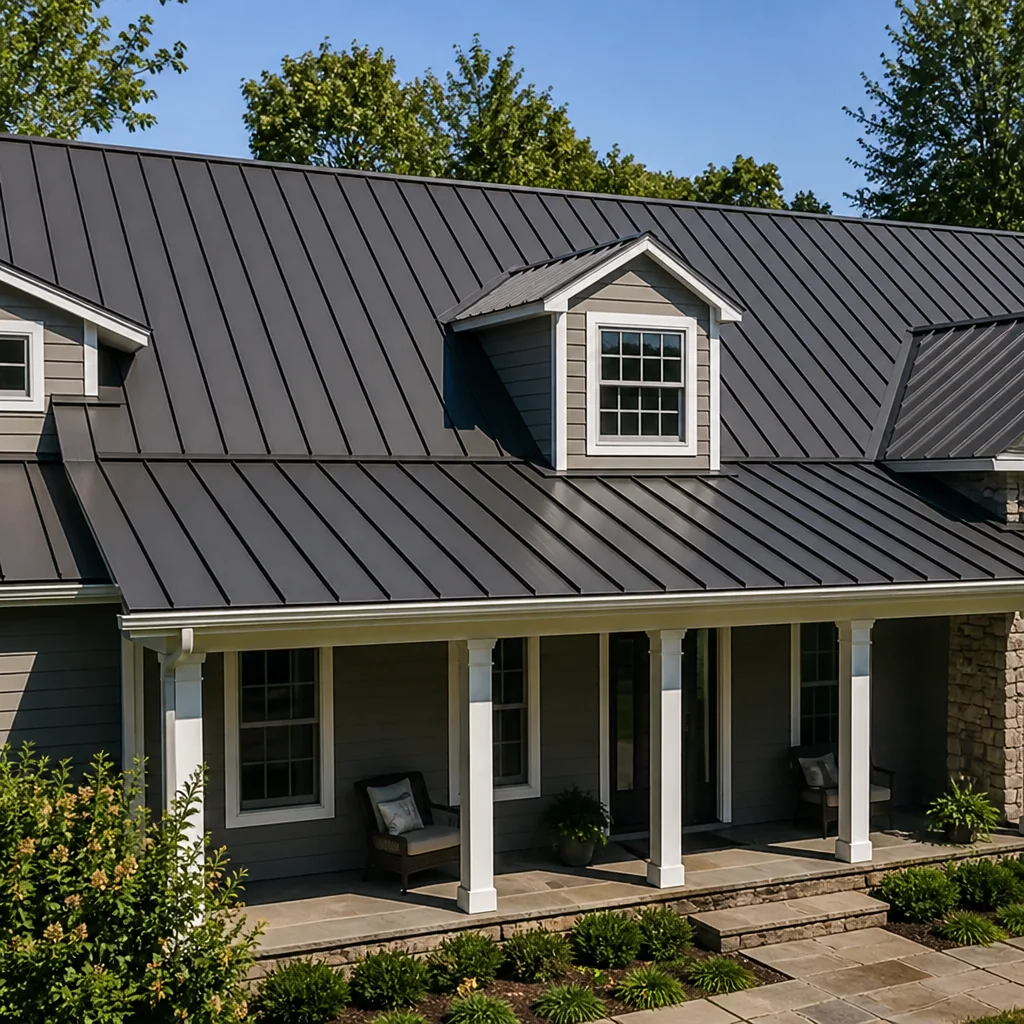 Metal roofing
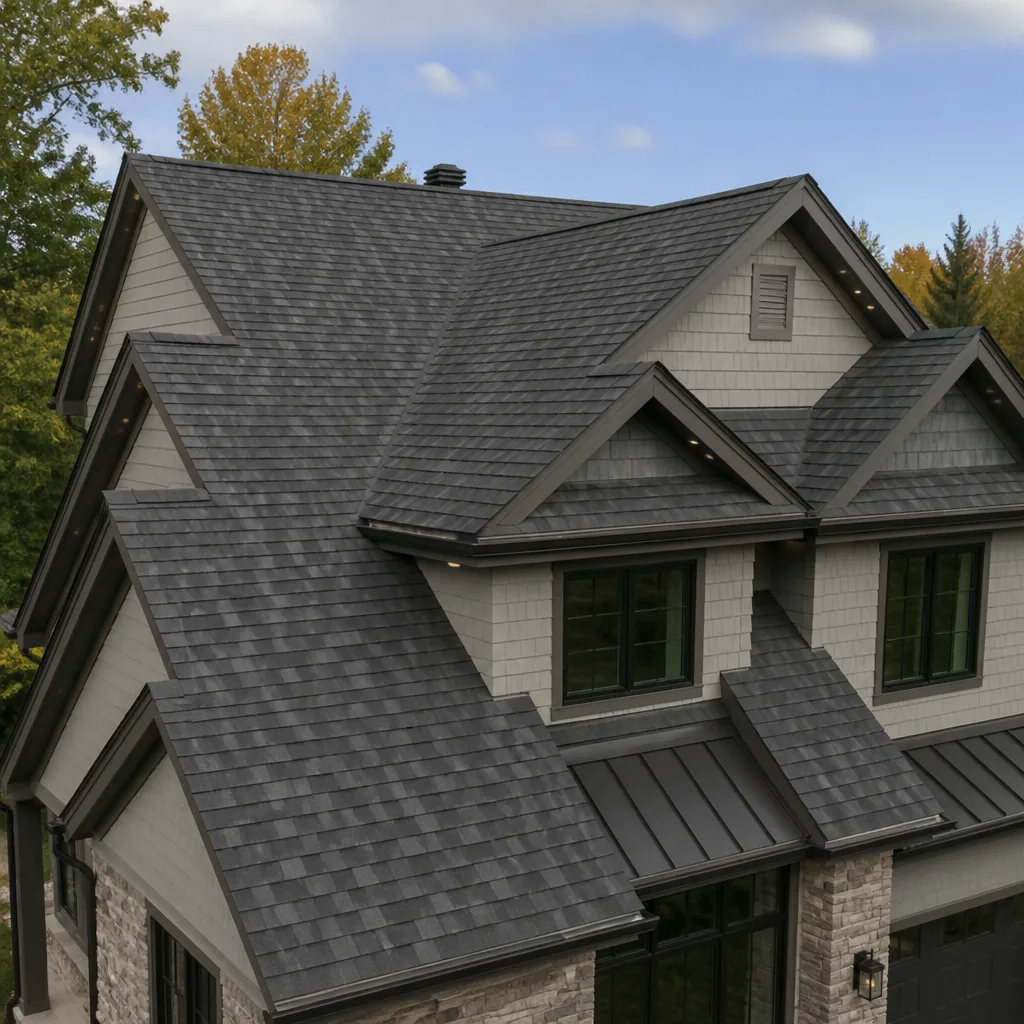 Architectural shingles
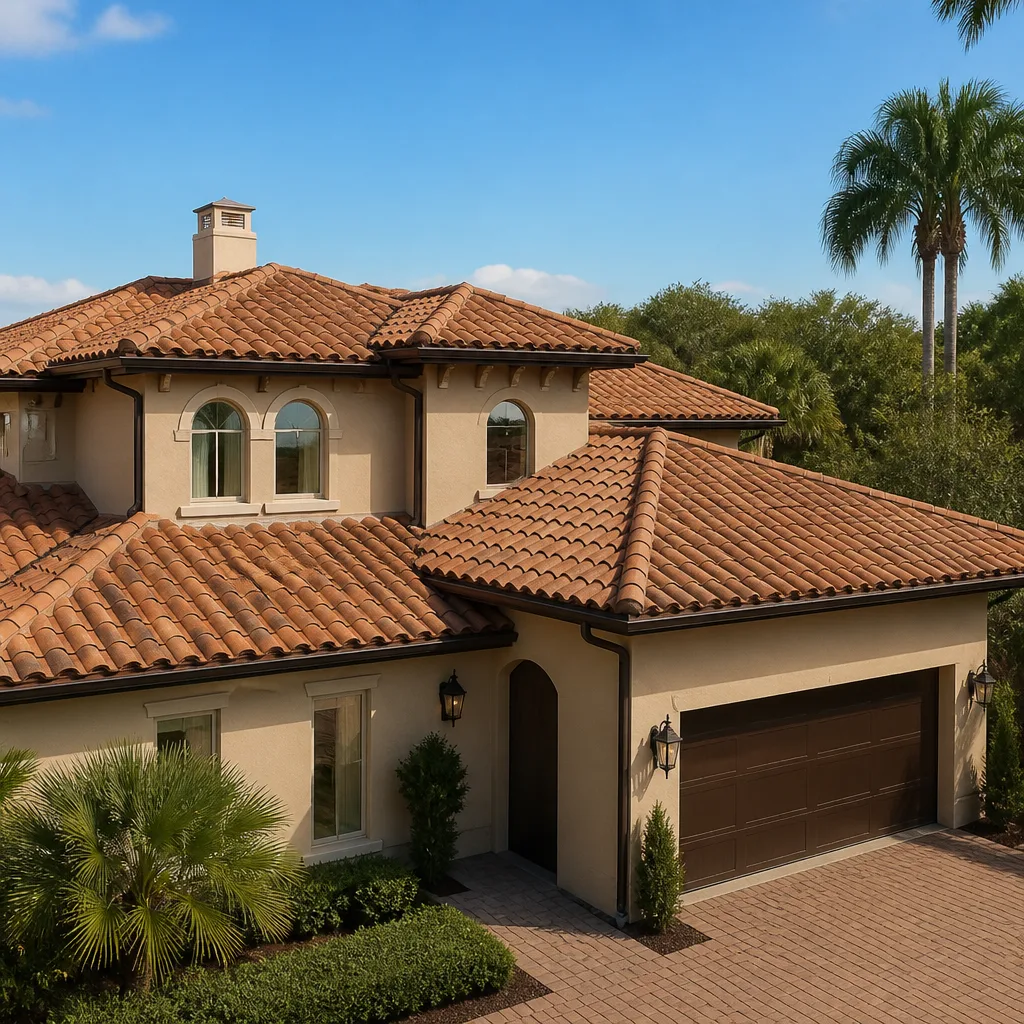 Tile roofing
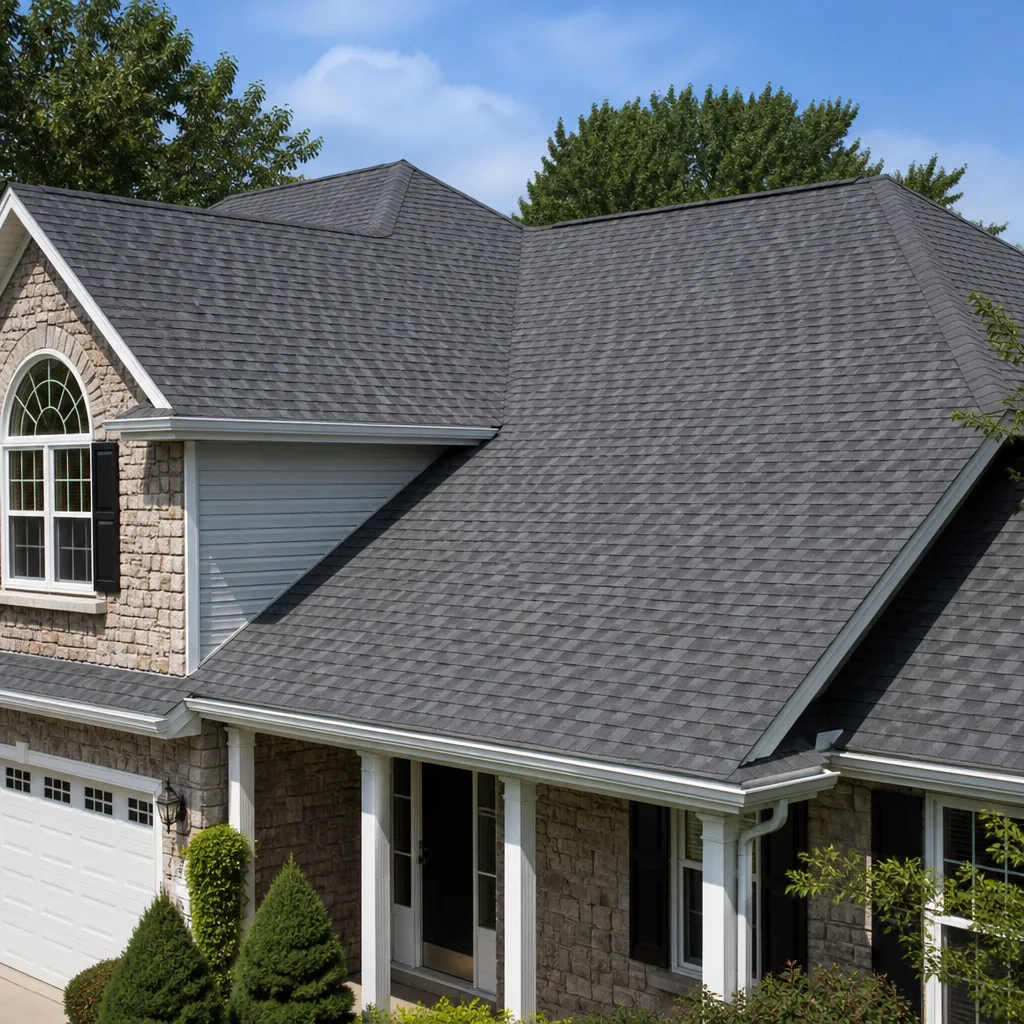 GAF
GAF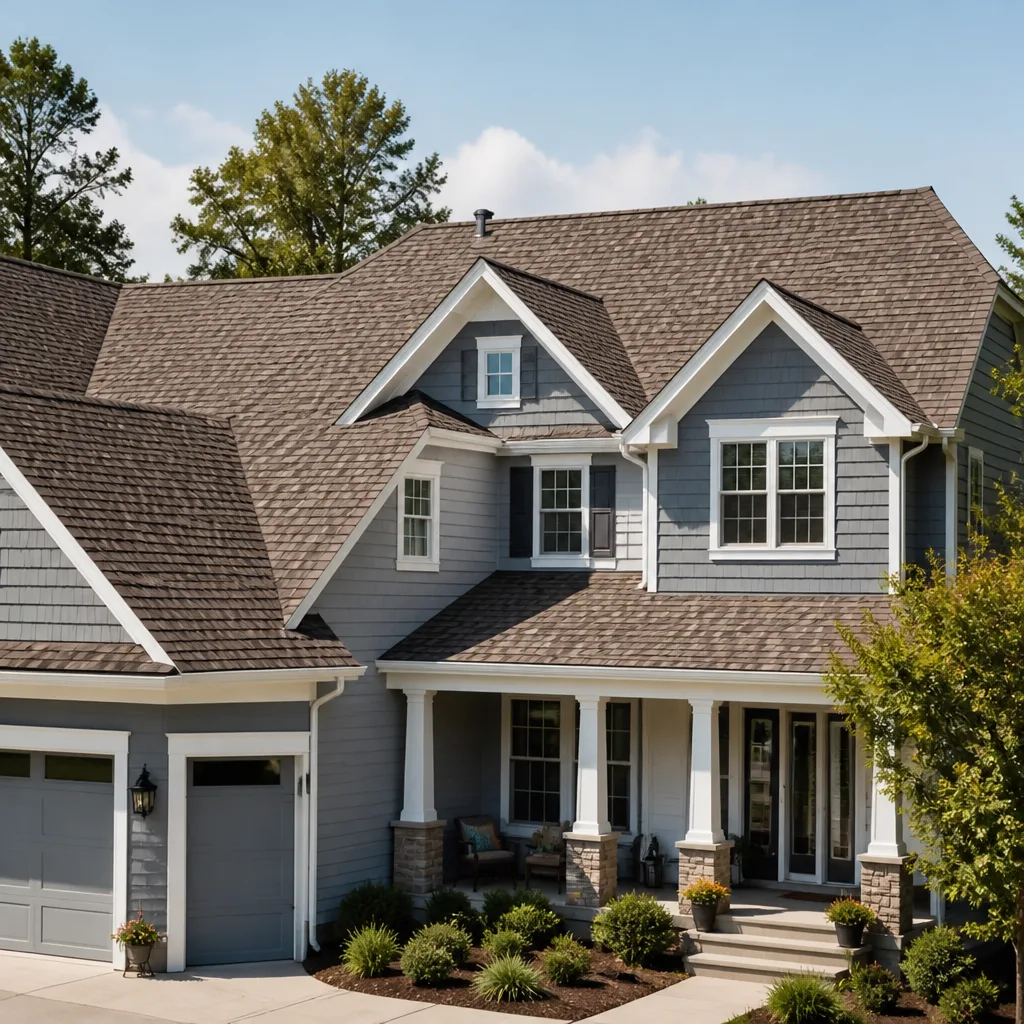 Owens Corning
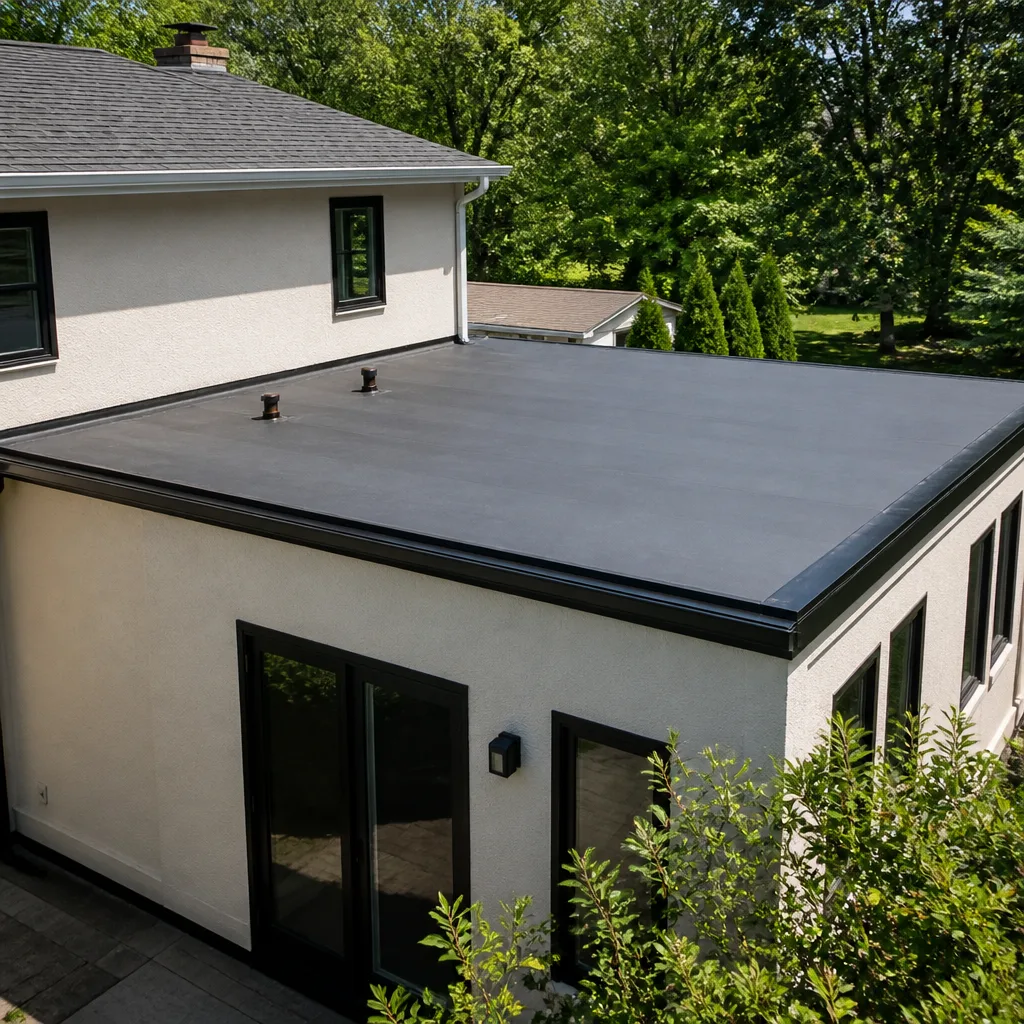 Flat & low-slope
Free roof inspection with deck photos before we talk money - GAF and Owens Corning certified installation
How to Hire a Roofing Contractor in Tampa: A Step-by-Step Guide
After a Tampa storm, unlicensed storm chasers from out of state outnumber licensed local roofers at homeowners’ doors within 48 hours. They arrive with clipboards, ladders strapped to rental trucks, and a script built around one thing: getting your signature before you’ve had time to think. The danger in hiring a Tampa roofer isn’t choosing between two finalists at the end of the process. It’s the first 10 minutes of the sales visit, when pressure tactics and verbal estimates push you toward a commitment you don’t have enough information to defend. This guide gives you a specific script and a document checklist so you control that conversation, whether you’re facing storm damage or planning a roof replacement on your own timeline. For more guides & resources on protecting your home, explore our blog.
Quick Answer
To hire a roofing contractor in Tampa, verify the contractor’s Florida license through the DBPR website, request a written estimate that includes five specific elements (scope, materials by brand and grade, permit responsibility, payment schedule, and warranty terms), compare at least three bids using matching material specifications, and never sign anything during the first meeting. A legitimate Tampa roofer will provide a written price before work starts and won’t pressure you to commit on the spot.
Styles & brands we work with
Table of Contents
- How to Verify a Florida Roofing License in Under Two Minutes
- The Five Things That Must Appear in a Written Estimate
- Questions to Ask on the First Call
- Red Flags Specific to Tampa’s Post-Storm Environment
- Why the Lowest Bid Is Often the Highest Risk in Tampa
- Insurance Claims and Assignment of Benefits: What to Know Before You Sign
- Common Mistakes to Avoid
- When to Call a Professional
- Frequently Asked Questions
How to Verify a Florida Roofing License in Under Two Minutes
Florida requires roofing contractors to hold a state license issued by the Department of Business and Professional Regulation, known as the DBPR. Verifying that license takes less than two minutes, and it’s the single most important step you’ll take before inviting anyone onto your property in Tampa.
Here’s the process:
- Go to the DBPR website and select “Verify a License.”
- Enter the contractor’s name or license number.
- Check that the license type is “Certified Roofing Contractor” or “Registered Roofing Contractor.”
- Confirm the license status reads “Current, Active.”
- Look at the original issue date. Contractors who’ve held an active Florida license for many years have a paper trail of work in the state.
Now, the distinction that most Tampa homeowners miss: a “Certified” license allows a contractor to work anywhere in Florida. A “Registered” license restricts the contractor to specific local jurisdictions. What matters for you is simpler than the geography. A certified license requires the holder to pass a statewide exam and meet statewide insurance and experience requirements. A registered license relies on local competency standards that vary from county to county.
Here’s the part that affects your warranty rights directly. If a contractor’s license shows as expired, suspended, or nonexistent, any work they perform on your roof is outside their legal authority in Florida. That means if something goes wrong, your recourse through the DBPR and the Florida Homeowners’ Construction Recovery Fund becomes complicated or unavailable. You lose the protections the state built for exactly this situation.
We check licenses reflexively. Erik Lindgren, who leads Birchbark Roofing Tampa home, has said that when a homeowner verifies a license before the first visit, the conversation that follows is different. Both parties know the foundation is solid.
You can also look up whether a contractor has complaints filed against them through the DBPR. Not every complaint is legitimate, but a pattern of unresolved complaints is information you need. It takes another 60 seconds.
The Five Things That Must Appear in a Written Estimate
Before you sign anything, the estimate needs five specific elements. If any one of them is missing, write “please add this” on the document and hand it back. A contractor who won’t put these in writing isn’t ready for your roof.
- Scope of work. A line-by-line description of what will be done. “Remove existing shingles, inspect and replace damaged decking as needed, install underlayment, install shingles, install flashing, clean up, haul away debris.” Every action the crew will take on your Tampa home goes here.
- Materials by brand and grade. “Architectural shingle” is not enough. You want “GAF Timberline HDZ, Lifetime warranty, color: Charcoal.” If the estimate says “30-year shingle” without a brand, ask for the exact product name. Different grades of the same brand vary widely in thickness, wind rating, and lifespan.
- Permit responsibility. The estimate must state who pulls the permit, who pays for it, and who handles the inspection. In Tampa, roofing permits go through the city or Hillsborough County depending on your address. A contractor who suggests skipping the permit is asking you to accept uninsured work and voiding the warranty before the first shingle comes off the pallet.
- Payment schedule. Florida law limits how much a contractor can request upfront. A typical residential roofing schedule is 10-30% deposit, with progress payments and a final payment due only after inspection passes and cleanup is complete. If someone asks for 50% down or more, that’s a red flag.
- Warranty terms. Two separate warranties exist: the manufacturer’s warranty on materials (this is where brands like GAF, CertainTeed, Owens Corning, and IKO differ) and the contractor’s workmanship warranty. Both should appear in writing with their duration and what they cover.
A written price before any work starts is not a nicety. It’s the difference between a contractor who’s accountable for what they promised and one who can revise verbal assurances later. When our crew at Birchbark Roofing Tampa quotes a job, the number you see is the one you pay. No change orders, no “we discovered unexpected damage” add-ons unless you approve them in writing first.
Questions to Ask on the First Call
The first phone call tells you more than the entire in-person sales pitch if you ask the right questions. Prepared local contractors answer these directly. Storm chasers and unprepared operators fumble, deflect, or start talking about how busy they are.
Here’s the script. Read it word for word.
- “What’s your Florida roofing license number?” A licensed contractor recites it from memory or has it on their business card. An unlicensed operator says “we’re working under someone else’s license” or “licenses don’t matter, the work matters.” Hang up on the second answer.
- “Do you have a physical office in Tampa?” A local contractor gives you an address. An out-of-state storm chaser gives you a P.O. box, a hotel, or a vague answer about “serving the whole state.”
- “Will you put the price in writing before any work starts?” The only acceptable answer is yes, with no conditions attached.
- “Who pulls the permit?” The answer should be “we do.” If they say “you can pull it as the homeowner,” that’s a legal workaround that shifts liability to you.
- “What does your cleanup process look like, specifically?” Listen for concrete answers: shoe covers, drop cloths, magnetic sweepers for nails, dumpster placement, a final walkthrough. Vague answers mean a vague clean-up.
We’ve been asked these questions hundreds of times, and we answer them the same way every time. A homeowner who asks them is a homeowner who’s done the homework. That’s the client we want.
Red Flags Specific to Tampa’s Post-Storm Environment
Tampa’s position on the Gulf creates a particular hiring environment after any named storm or serious squall. The American roofing market floods with out-of-state operators who follow storm cells the way some boats follow fishing seasons. They know which phrases work on a scared homeowner, and they’re very good at delivering them.
Here are the specific tactics to recognize:
- The waived deductible offer. “We’ll cover your deductible” or “We’ll handle the deductible for you.” This is insurance fraud in Florida. The contractor inflates the claim to hide your deductible inside the total, and your insurance company will eventually find out. You’re the one with the signed document.
- Assignment of Benefits pressure. An AOB document signs over your insurance claim rights to the contractor. Once signed, the contractor negotiates directly with your insurer, and you lose control of the claim amount, the scope, and the timeline. The document is legal in Florida, but signing it under pressure after a storm is the exact scenario the state legislature has been fighting about for years.
- “We’ll handle your insurance.” A legitimate roofer works with your insurance company. They don’t take over your claim. When someone promises to manage everything for you, ask what you’re signing that gives them the authority to do so.
- The next-day discount. “Sign today and we can lock in this price.” Roofing prices don’t move that fast. This is a closing tactic, not a market reality. Any contractor offering a discount for same-day signatures is pricing for the signature, not the roof.
- The unmarked truck. Florida-licensed contractors doing legitimate work drive trucks with their license number printed on them. Storm chasers drive rental trucks with magnetic signs they bought online. Check the plate. Out-of-state plates right after a Tampa storm tell you something.
The storm-chasing pattern is so consistent that local roofers can predict it. After a major weather event, we see the same trailers and the same rental trucks appear in Tampa neighborhoods, then vanish six weeks later when the claims are cashed and the complaints start rolling in to the DBPR.
Why the Lowest Bid Is Often the Highest Risk in Tampa
Tampa is a competitive roofing market, which means bid spreads can be wide. When three estimates come back at $9,000, $11,500, and $14,000 for what looks like the same roof, most homeowners feel the pull toward saving $5,000. Here’s why that low bid is often the most expensive option on the table.
Roofing is a materials and labor business where legitimate costs don’t compress. The shingle, underlayment, flashing, fasteners, and dumpster fees cost roughly the same for every licensed contractor pulling from the same supply houses in Tampa. Labor for competent crews is similarly priced. When one bid comes in 30-40% below the others, the savings don’t come from efficiency. They come from one of three places: thinner shingles, skipped underlayment, or unreported labor.
Here’s how to compare bids accurately:
- Put the material specs side by side. A bid for a GAF Timberline HDZ roof should not be compared to a bid for a builder-grade 3-tab shingle. They’re different products with different lifespans. Normalize the specs first.
- Check for included items. Does the low bid include decking inspection? Drip edge? Valley metal? Ridge vent? Bathroom fan ventilation? These items add up fast, and exclusion language hides them.
- Look at the payment schedule difference. A contractor asking 50% down has different cash flow needs than one asking 20% down. The second one isn’t financing your roof with your own deposit.
- Compare the workmanship warranty terms. A two-year labor warranty means the contractor expects to be reachable for two years. A 10-year labor warranty means they’ve built their business to last.
In Tampa’s specific climate, the underlayment choice matters more than in dry western markets. Our humidity, afternoon thunderstorms, and hurricane exposure mean a synthetic underlayment or at least an upgraded felt is not optional. That’s a Florida-specific line item that disappears from cut-rate bids.
Insurance Claims and Assignment of Benefits: What to Know Before You Sign
Florida’s insurance environment is unlike any other state’s, and Tampa sits at the center of it. If your roof needs repair or replacement due to storm damage, the way you approach the insurance claim determines how much of the replacement cost you actually recover.
Your first call should be to your insurance company, not a roofer. File the claim, schedule the adjuster, and get the claim number. A reputable roofing company in Tampa will meet the adjuster on-site to walk the damage together. That meeting is where legitimate contractors earn their fee. They know what the adjuster is looking for, they understand the policy language, and they can point out damage that a homeowner might miss.
Now here’s the AOB conversation again, because it’s the highest-stakes document in Florida roofing. When you sign an Assignment of Benefits, you transfer your claim rights to the contractor. The contractor then bills your insurance company directly and handles any disputes. Some Tampa homeowners like the convenience. Others discover that once the AOB is signed, the contractor has no incentive to keep costs reasonable since payment flows through the claim, not through your approval.
Our guidance at Birchbark Roofing Tampa is straightforward: read every document before you sign it, and never sign an AOB during a first meeting. Take it home. Read it. Ask a lawyer or a trusted advisor. The roof waited through one more storm; it can wait through one more night.
Common Mistakes to Avoid
- Signing during the first visit. A roofing decision involves thousands of dollars and affects your home for decades. No legitimate contractor needs a signature on the same day. If the deal expires when the estimator walks out the door, that was never a deal.
- Hiring unlicensed labor. In Tampa, unlicensed roofers operate constantly, especially after storms. Their prices look attractive. Their work has no warranty, no insurance coverage, and no recourse. If a worker falls off your unlicensed roofer’s ladder, your homeowner’s insurance is on the hook.
- Making your decision on price alone. The three-bid comparison only works if the bids describe the same roof. A missing line item is a price reduction by omission, and you’ll discover it when the line item becomes a change order.
- Skipping the permit inspection. Some contractors will offer to work without a permit to save you a few hundred dollars. A Tampa roof installed without a permit is an uninsurable roof, and it becomes a liability when you sell the house.
- Paying in full before inspection. The final payment should be held until the permit inspection passes and the cleanup walkthrough is complete. Contractors who demand full payment before inspection are telling you they don’t expect to pass.
- Not asking about cleanup in writing. Debris, nails, and shingle granules end up in your gutters, your garden beds, and your driveway. The cleanup plan should be in the written estimate, not a verbal promise made while shaking hands.
- Assuming the warranty transfers. If you’re planning to sell your Tampa home in the next few years, ask whether the manufacturer’s and contractor’s warranties transfer to a new owner. Some do, some don’t, and the answer affects your home’s sale value.
When to Call a Professional
Some roof issues are obvious: water stains spreading across the ceiling, shingles in the yard after a storm, granules collecting in the gutters. Others are quieter: a soft spot you can’t see from the ground, flashing that’s pulling away at the chimney, a roof that’s 18 years old and showing even wear. Our Roofing Company Maintenance Checklist for Tampa Homeowners covers what to watch for between inspections. A professional inspection costs you nothing at most reputable Tampa roofers, who provide free estimates as standard practice.
Birchbark Roofing Tampa offers free estimates in Tampa, and we’re happy to walk your roof with you and show you exactly what we’re seeing, even if the answer is that no work is needed yet. Call (850) 600-8577 to schedule a time. We answer the phone 24 hours a day, seven days a week, with a live person.
Frequently Asked Questions
Search the contractor’s name or license number on the Florida DBPR website’s “Verify a License” tool. The license should show as “Current, Active” and list the type as Certified or Registered Roofing Contractor. This takes under two minutes and should be done before any contractor visits your Tampa home.
A legitimate roofing estimate includes five elements: detailed scope of work, materials listed by brand and specific product name, permit responsibility, payment schedule, and warranty terms for both materials and workmanship. If any of those five items is missing, ask for it in writing before you consider signing. Call (850) 600-8577 for a free written estimate that includes all five.
Most residential asphalt shingle roof replacements in Tampa run between $9,000 and $16,000 depending on the home’s size, roof pitch, material brand, and whether decking replacement is needed. The spread between bids is normal; what matters is comparing bids that specify the same material grades. Call (850) 600-8577 for an exact written quote, and we’ll walk you through the line items.
Only after you’ve read the document carefully, understand that you’re transferring your insurance claim rights to the contractor, and have had time to consider the decision outside the presence of the roofer. Never sign an AOB during the first meeting, and never under pressure after a storm. The document has legitimate uses, but the storm-chasing industry has made it the most dangerous piece of paper in Florida roofing.
Start by listing the exact shingle brand and product line from each bid, then normalize them. A GAF Timberline HDZ bid should be compared to other architectural shingle bids of similar grade, not to a builder-grade 3-tab shingle. Confirm each bid includes the same line items: decking inspection, underlayment, drip edge, valley metal, ridge vent, and cleanup. Once the specs match, you’re comparing labor quality and warranty terms, which is where legitimate differences live.
A complete cleanup includes magnetic sweeping for nails, gutter clearing, debris hauling, and a final walkthrough with the homeowner. Here’s how roof repair in Tampa should end: shoe covers and drop cloths protected your floors during the work, all debris is cleared and photographed before our crew leaves, and you walk the property with the crew lead to confirm everything is as it should be. Call (850) 600-8577 for an estimate that includes cleanup in writing.
The Bottom Line
Hiring a roofing contractor in Tampa is a process you can control, not a gamble you have to take. Verify the Florida license on the DBPR website. Demand a written estimate that includes scope, materials by brand and grade, permit responsibility, payment schedule, and warranty terms. Ask the five first-call questions word for word. Recognize the post-storm pressure tactics: waived deductibles, AOB pressure, next-day discounts. Compare bids using normalized material specs, not just the bottom line. And never sign anything during the first meeting. The roof protects your whole house, but the hiring decision protects your family’s finances. We offer free estimates with written pricing and no pressure. Call (850) 600-8577 when you’re ready, and if you’re not ready, the guide will be here.
Written by Erik Lindgren, Owner at Birchbark Roofing Tampa, serving Tampa since 2000.
See the difference
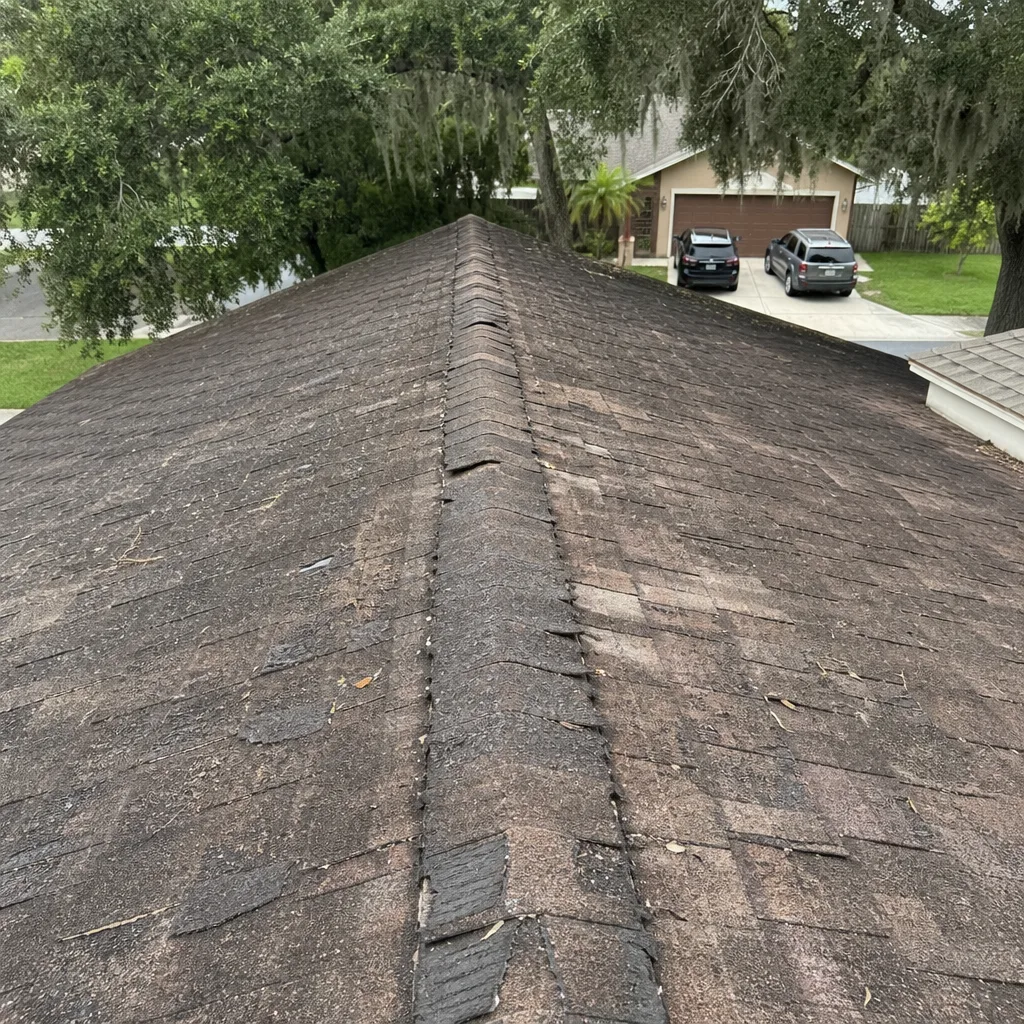 Before
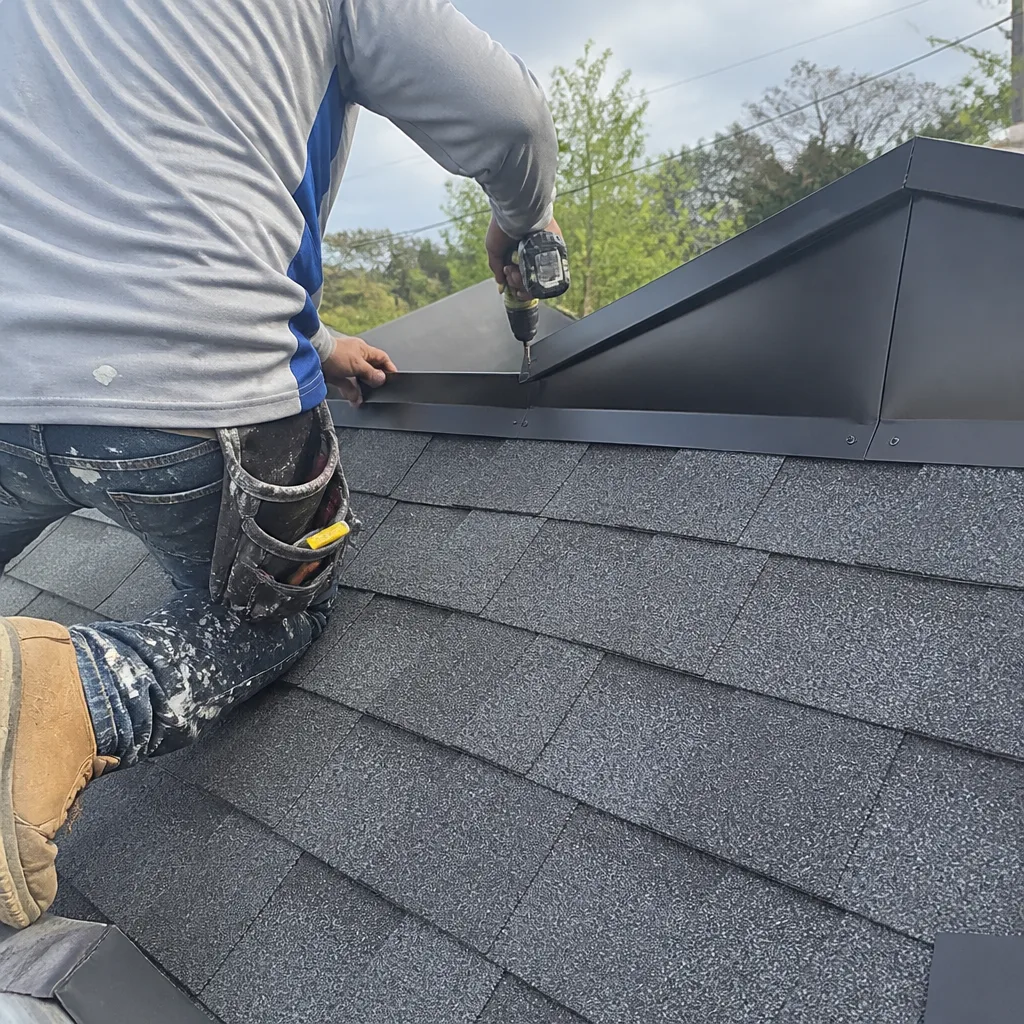 After
After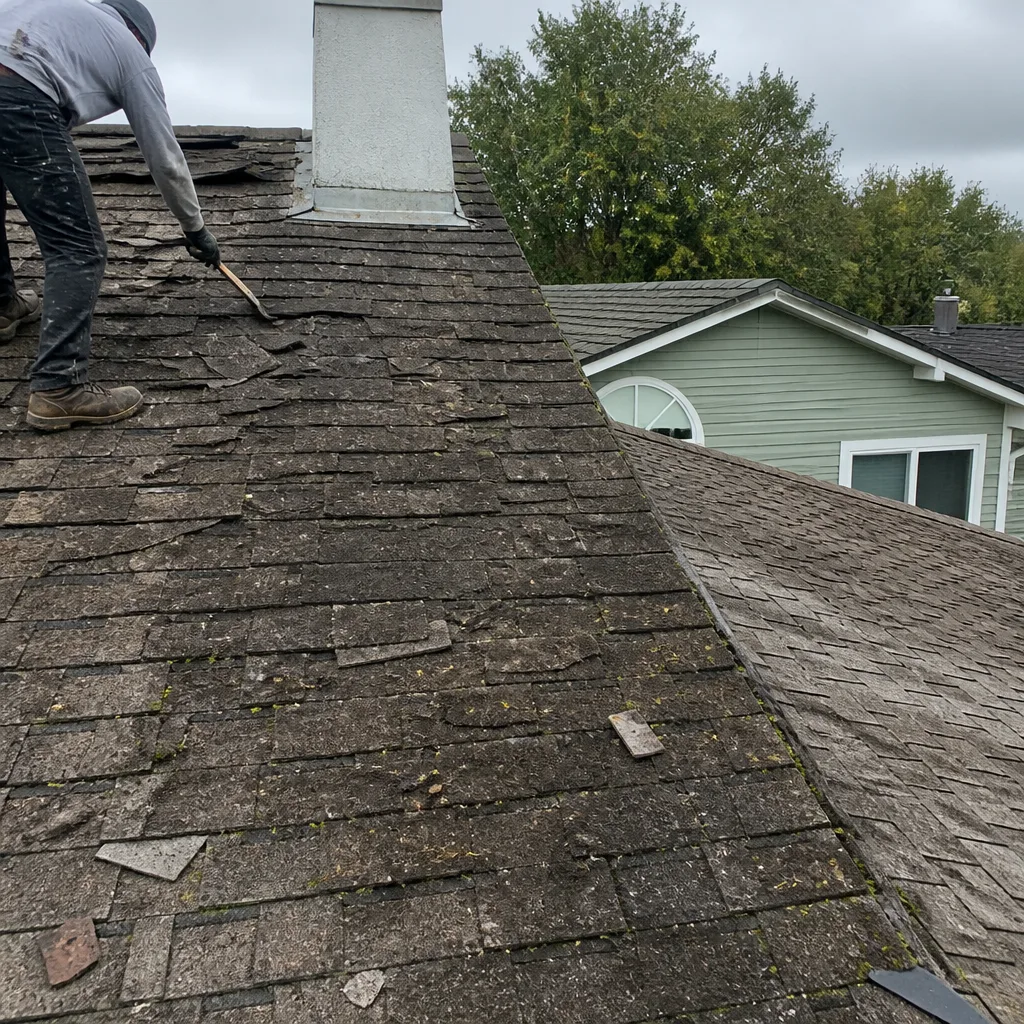 Before
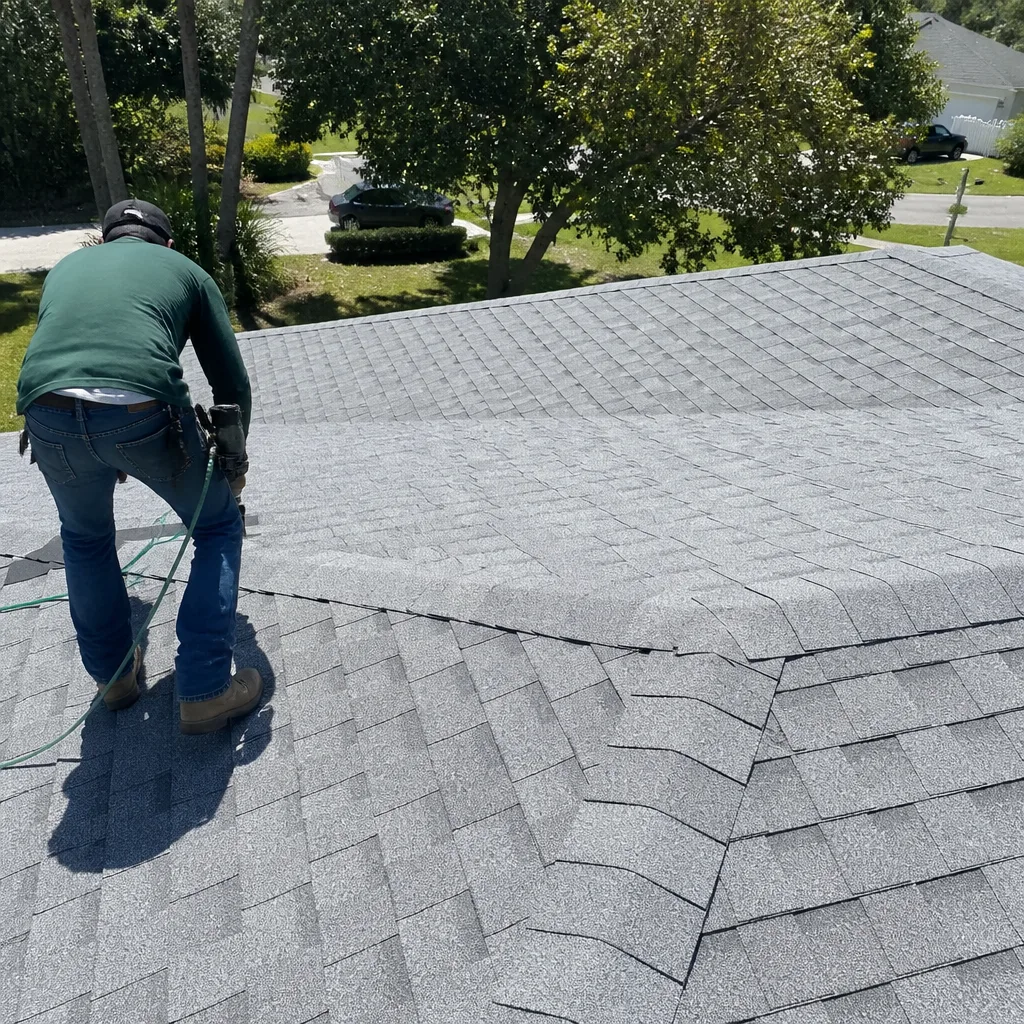 After
After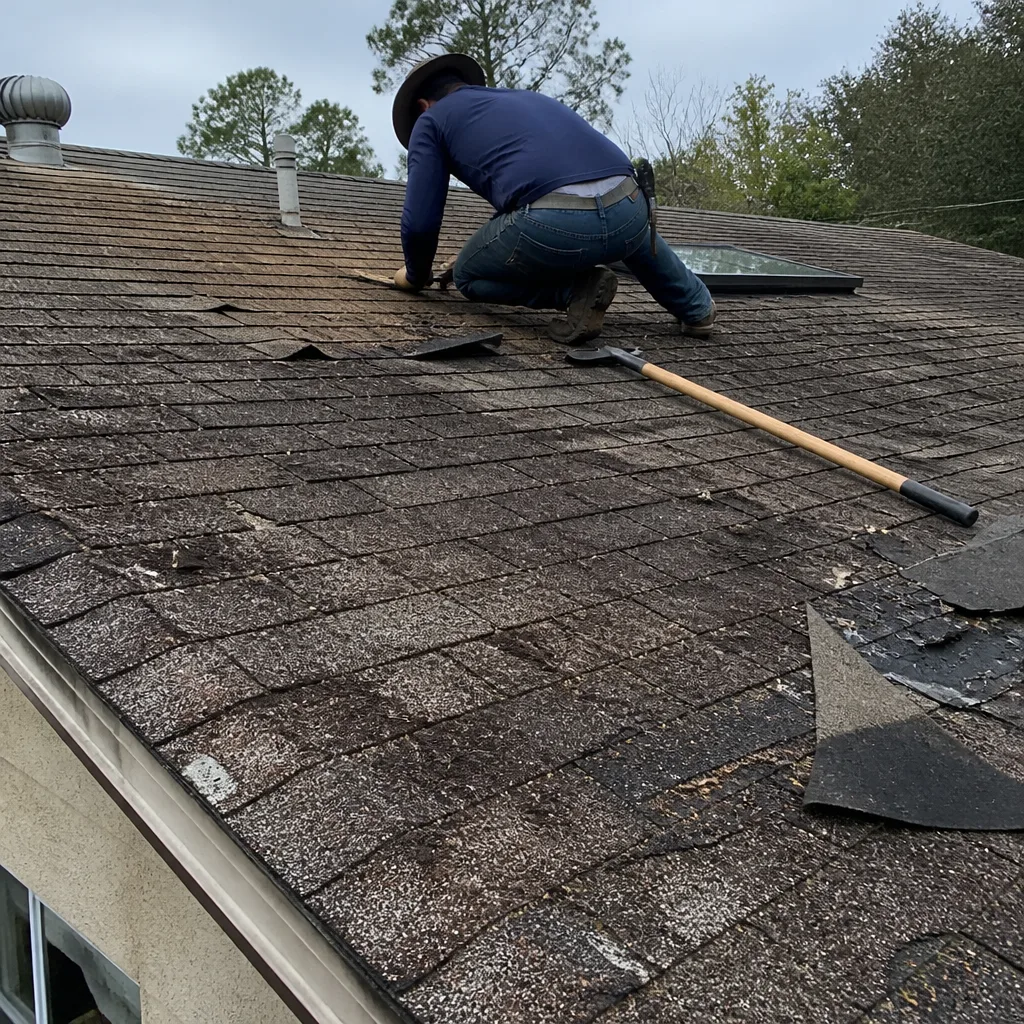 Before
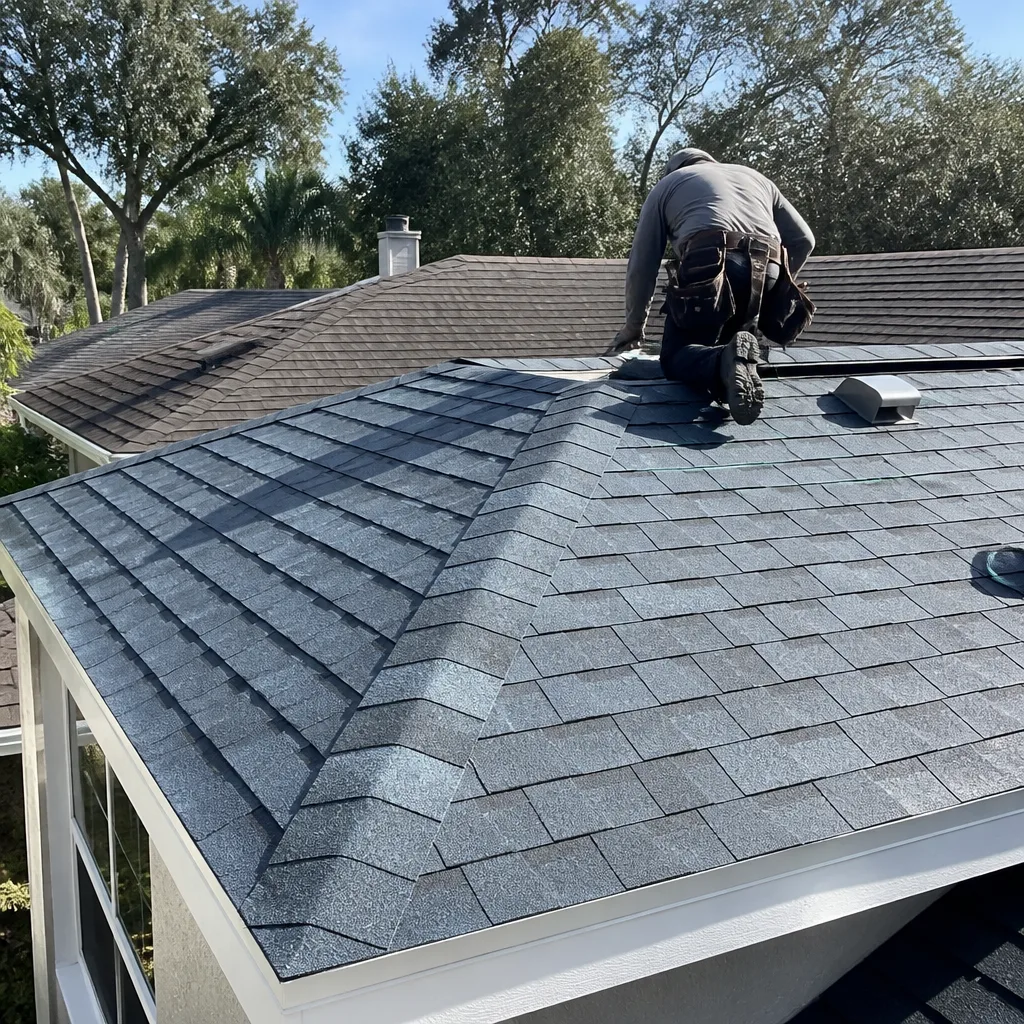 After
After