
Last updated October 17, 2026
 Metal roofing
 Architectural shingles
 Tile roofing
 GAF
GAF Owens Corning
 Flat & low-slope
Free roof inspection with deck photos before we talk money - GAF and Owens Corning certified installation
Roofing Company Maintenance Checklist for Tampa Homeowners
The most expensive roof repairs Tampa roofers see weren’t caused by hurricanes. They were caused by small, quiet failures: a clogged scupper that backed water up under the shingles, a lifted ridge cap that let wind get underneath, a valley packed with oak leaves that held moisture against the decking for six months. The storm that finally tears the roof off is rarely the storm that started the problem. This guide is a maintenance checklist built for Tampa specifically: the June-through-September storm season, the year-round algae creep, the relentless heat that bakes sealant brittle, and the afternoon downpours that find every weak point. You’ll learn what to check, what month to check it, which findings mean call a roofer today, and which ones mean note it and recheck in 90 days.
Quick Answer
A Tampa roof maintenance checklist should be anchored to the storm season, not the calendar seasons: inspect and clear the roof in late May before hurricane season starts, check for granule loss and lifted flashing after every named storm or severe thunderstorm, and do a full professional inspection once a year, ideally in November after storm season ends. Surface algae staining is cosmetic and can wait; moss root infiltration, lifted ridge caps, clogged scuppers, and granule loss in the gutters are structural red flags that need a licensed roofer within days, not months.
Styles & brands we work with
Table of Contents
- The Tampa Threat Model: What Actually Damages Roofs Here
- The Tampa Month-by-Month Maintenance Calendar
- Algae Staining vs. Moss Root Infiltration: How to Tell Them Apart From the Ground
- Five Post-Storm Checks You Can Do Safely Without Going on the Roof
- Which Maintenance Tasks Void Manufacturer Warranties
- What a Roofer Should Document and Leave With You After a Professional Visit
- Common Mistakes to Avoid
- When to Call a Professional
The Tampa Threat Model: What Actually Damages Roofs Here
Tampa roofs face a different threat profile than roofs in Atlanta, Charlotte, or anywhere north of I-10. The biggest difference is water volume delivered in short windows. A typical Tampa summer afternoon thunderstorm can drop an inch of rain in 45 minutes. Hurricane season adds the wind component, but even a “dry” summer week includes at least two or three heavy downpours. That means water moves fast, backs up quickly, and exploits any compromised flashing, any sagging gutter run, any granule-bald shingle patch.
Heat is the second threat. Tampa sees 80 to 90 days a year above 90 degrees, and attic temperatures on those days routinely hit 140 to 150 degrees. That heat bakes roof sealants, flashing tape, and pipe boot collars until they crack. We’ve pulled off pipe boots in Tampa that snap like potato chips, not because they were defective, but because they had survived twelve Tampa summers. A roof in Tampa ages faster at the sealant and flashing points than the same roof in a cooler climate would, which changes what a useful maintenance checklist actually looks like.
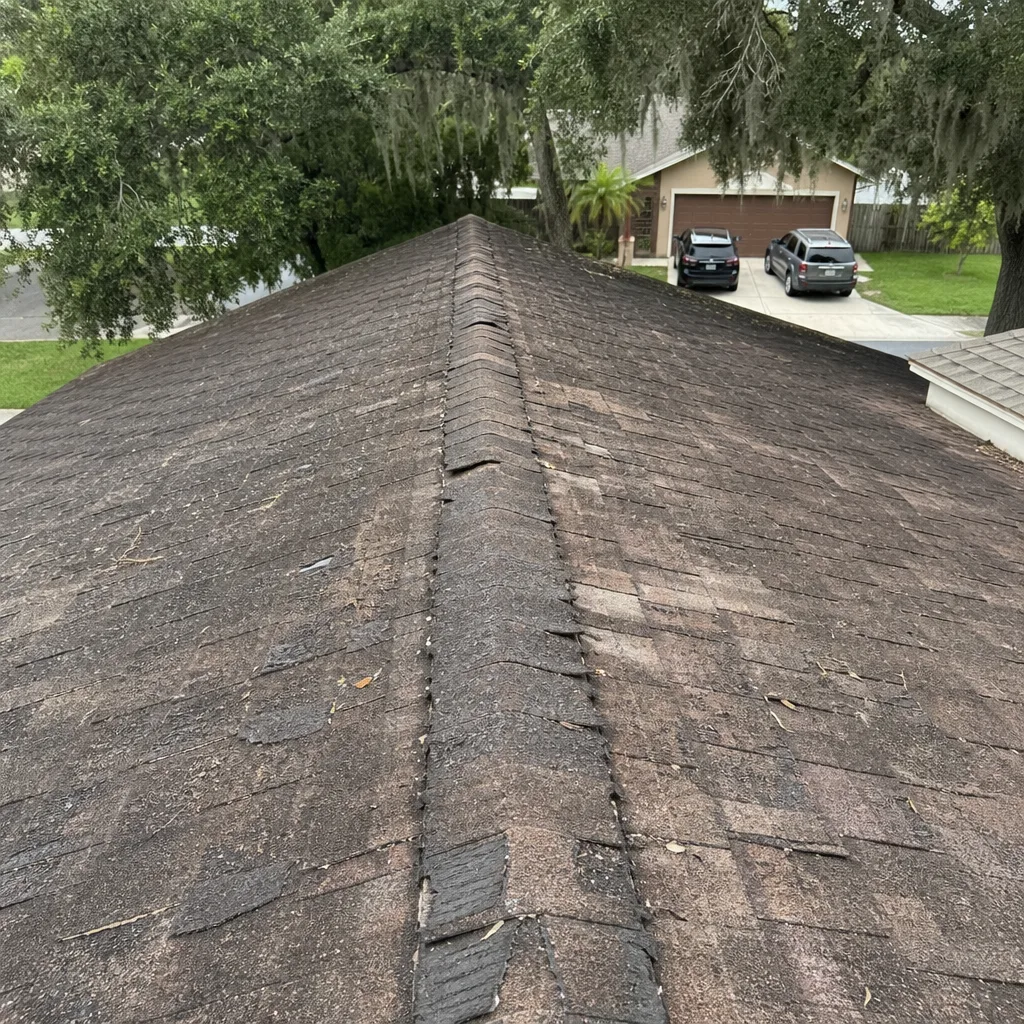
The third threat is biological. Tampa’s humidity and warm nights create ideal conditions for algae – specifically Gloeocapsa magma, the black streaking you see on nearly every Tampa roof over ten years old. Algae itself doesn’t destroy shingles. But it holds moisture, and it signals a roof that stays damp for long stretches. That dampness accelerates rot at the edges, under flashing, and anywhere organic debris (oak leaves, pine needles, Spanish moss) accumulates and holds water against the roof surface.
The maintenance checklist that matters for Tampa is built around these three forces: water volume, heat-cracked sealants, and biological moisture. Northern-style spring/fall checklists that recommend “inspect after the last frost” don’t map onto Tampa’s reality. Our storm season is the maintenance season.
The Tampa Month-by-Month Maintenance Calendar
You don’t need to think about your roof every week. You need to think about it at five specific points in the year, tied to what the weather in Tampa is actually doing. Here’s the calendar we recommend to every homeowner who calls Birchbark Roofing Tampa for roof repair, and it follows the storm cycle, not the equinoxes.
Late May (Before Hurricane Season Starts)
- Clear all gutters and downspouts by hand. Tampa’s live oaks drop leaves and acorns from March through May, and they’ll be packed in the gutters by Memorial Day. Clogged gutters make water sheet over the fascia and down behind the gutter, which rots the soffit and fascia board from behind.
- Check every scupper and secondary drain on a flat or low-slope roof. This is the most overlooked item on flat-roof Tampa homes and commercial buildings. Scuppers clog with leaves, and the water that backs up finds its way under the roof membrane faster than you’d believe.
- Walk around the house and look at shingle edges from the ground. Look for shingles that are curling up at the edges, cracked, or missing. High-resolution phone photos from the yard can show details you won’t want to climb for.
- Check pipe boots and vent pipe collars. These are visible from the ground on many single-story Tampa homes with binoculars. The rubber collar should sit tight around the pipe, not be cracked, split, or pulled up.
June Through September (Storm Season)
During these four months, do a ten-minute visual check after every severe thunderstorm or named storm that brings winds above 40 mph. Don’t climb the roof; just walk the perimeter and check the ground. The specific post-storm checks are covered below.
Early October (Post-Storm Season Assessment)
- Check the gutters for granule accumulation. After a storm season, Tampa gutters often show a thin layer of shingle granules. A little is normal wear; a heavy accumulation (you can see the granules piled up in the downspout bends) means the shingles lost a meaningful amount of their protective mineral surface.
- Look at ridge caps from the ground on both gable ends. Wind works ridge caps loose over the course of a storm season. A ridge cap that’s lifted even a quarter-inch is a leak waiting for the next downpour.
- Inspect flashing around chimneys, skylights, and roof-to-wall intersections. Use binoculars. Look for separated caulk, lifted metal, or daylight showing where flashing should meet shingles.
November (Annual Professional Inspection)
Book a professional inspection in November, after storm season ends and before the holiday season disrupts schedules. This is the one time of year when a trained roofer should walk the roof, check sealants, examine flashing points, and document everything with dated photos. A November inspection catches the season’s accumulated damage and gives you months of dry weather to schedule repairs if needed.
Any Month (After Heavy Debris Events)
Any time a storm drops large branches, heavy Spanish moss, or palm fronds on your roof, do a ground check within a few days. Heavy organic debris holds moisture against the shingles and blocks water flow toward the gutters.
For homeowners who want someone else to own this calendar, our roofing company in Tampa offers annual maintenance inspections with documented, dated photos of every problem area, so you’re never guessing what was noted last year.
Algae Staining vs. Moss Root Infiltration: How to Tell Them Apart From the Ground
This is one of the most misunderstood distinctions in Tampa roofing, and the difference matters for your wallet. Algae streaking is largely cosmetic. Moss root infiltration is structural. Here’s how to tell them apart without leaving your yard.
Algae: Black Streaks, Flat Growth, Cosmetic
The black streaks you see on Tampa roofs are colonies of Gloeocapsa magma, a cyanobacterium that feeds on the limestone filler in asphalt shingles. It grows flat against the shingle surface, appearing as dark streaks running down from the ridge. Algae doesn’t lift the shingle, doesn’t penetrate it, and doesn’t trap water the way moss does. It’s ugly. It shortens the visual life of your roof. But it doesn’t cause leaks, and it doesn’t compromise the shingle’s waterproofing. In our experience, algae staining can wait until a roof cleaning or the next replacement. You don’t need to act on it this week.
Moss: Raised, Cushion-Like, Structural
Moss, by contrast, grows up off the shingle surface in green cushions. Moss has root-like structures (rhizoids) that grip into the shingle’s mineral surface and can wedge between shingle layers, lifting them ever so slightly. That lift allows water to run sideways under the shingle, which is exactly where a shingle roof is most vulnerable. Moss also holds water against the shingle for hours after the rain stops, which accelerates granule loss and premature shingle breakdown. On a Tampa roof, moss is most common on the north-facing and heavily shaded roof planes, or under overhanging oak trees.
How to tell them apart from the ground: Algae lies flat and looks like a dark stain, almost like it was painted on. Moss is raised and textured, like green velvet or a miniature forest. Use a pair of binoculars or a phone camera on zoom. If it looks flat, it’s algae. If it looks dimensional, it’s moss. If you see moss, call a licensed roofer. Moss root infiltration left unchecked will shorten the life of the shingles underneath it, and in Tampa’s wet climate, the damage compounds quickly.
Algae removal requires care: pressure washing can blast granules off the shingles and void the manufacturer’s warranty. We use low-pressure cleaning methods and recommend any homeowner considering algae treatment to ask how the contractor protects the shingle surface. That answer tells you a lot about the contractor.
Five Post-Storm Checks You Can Do Safely Without Going on the Roof
You don’t need to climb a ladder after a storm. In fact, you shouldn’t. Wet shingles are slippery, and after a storm there may be hidden damage you can’t see from above until you step on it. These five checks take about ten minutes, all from the ground, and they’ll catch most developing problems before they become interior leaks.
- The granule-in-gutter test. After the storm passes and the rain stops, check your gutter downspouts and the gutter troughs. If you see a noticeable pile of what looks like black, grey, and white sand at the downspout openings, your shingles are losing granules. A little granule loss is normal wear; a heavy accumulation after one storm means the shingles are near the end of their life, or the storm’s wind got under the shingle tabs and abraded them.
- The skylight-and-chimney circle check. Walk a full circle around the house and look up at every roof penetration, including skylights, chimneys, vent pipes, and the roof-to-wall flashing. Look for lifted metal flashing, missing shingle tabs around the penetration, or visible gaps between the flashing and the roof surface.
- The soffit-and-fascia scan. Look along the underside of the roof overhang (the soffit) and the fascia board at the roof edge. After a storm, you’re looking for water staining, peeling paint that appeared suddenly, or softening wood. These are signs that water got pushed under the roof edge during the storm.
- The yard debris audit. Walk your yard and look at what the storm left behind. If you find shingle tabs, pieces of ridge cap, or large sections of underlayment in the yard, the roof has lost material. Even if the roof looks fine from the ground, lost shingle tabs mean lost coverage, and the next rain will find those gaps.
- The attic daylight test. If you’re comfortable going into your attic, go up on a bright, sunny day after the storm, turn off the attic light, and look for any pinpricks of daylight showing through the roof decking. Daylight through the decking means a puncture or missing shingle, and it’s a leak that’s one rain away from appearing inside the house.
If any of these five checks turns up something concerning, don’t wait. Call a licensed roofer in Tampa for a full inspection. See our guide to Roofing Permits, Codes & Inspections in FL: What You Need to Know before scheduling major work. The post-storm window is when small problems are cheapest to fix. A lifted flashing that costs $400 to repair in October can become a $4,000 drywall and decking repair by February if it’s left through the fall rains.
Which Maintenance Tasks Void Manufacturer Warranties
This is the section most Tampa homeowners have never seen, and it matters more than most people realize. Your shingle manufacturer’s warranty is a contract. That contract contains maintenance requirements, and it contains exclusions for certain types of homeowner-performed work. Violating those terms can void the warranty, and you won’t know until you file a claim.
What voids a manufacturer warranty
Pressure washing. Most major shingle manufacturers, including Owens Corning and CertainTeed, explicitly exclude damage caused by pressure washing from their warranty coverage. High-pressure water strips the protective mineral granules from the shingle surface. The granules are the shingle’s UV protection and its fire resistance; lose the granules and the shingle mat is exposed to direct sunlight, which accelerates breakdown dramatically.
Sealant or coating applications. Applying an aftermarket roof coating, sealant, or “rejuvenation” product to asphalt shingles typically voids the manufacturer’s warranty. The manufacturer didn’t test the coating, can’t vouch for how it interacts with the shingle chemistry, and the warranty contract excludes third-party chemical treatments. We’ve had homeowners ask about roof coatings after seeing advertisements, and the answer is always the same: if the manufacturer’s warranty matters to you, don’t do it.
DIY repairs using incompatible materials. Replacing a few shingles yourself isn’t a warranty issue if it’s done correctly and the roof continues to perform. But walking on the roof repeatedly can crack shingles, especially in Tampa’s heat where shingles are brittle. And layering a new shingle over an old, curled one, or using roofing cement in place of a proper repair, may come back to haunt you if you need to file a warranty claim.
What does NOT void a manufacturer warranty
Routine gutter cleaning done carefully, visual inspections, and professional maintenance performed by a licensed contractor – including replacing individual damaged shingles, resealing flashing with compatible products, and clearing debris – don’t void the warranty. IKO and Atlas have similar provisions in their warranty literature: the homeowner is expected to keep the roof clear of debris and address damage promptly, and professional maintenance is explicitly allowed.
For homeowners planning major maintenance work – particularly anything beyond gutter cleaning and visual checks – it’s worth asking the roofer to confirm, in writing, that the work will not violate the shingle manufacturer’s warranty terms. Any reputable Tampa roofer should be willing to put that in writing. If they won’t, you have your answer.
What a Roofer Should Document and Leave With You After a Professional Visit
When you pay for a professional roof maintenance visit or inspection, you’re not just paying for the hour of work. You’re paying for the documentation that lets you track the roof’s condition over time and prove to a manufacturer or a future buyer that the roof was maintained. A professional maintenance visit in Tampa should produce a specific set of deliverables. If the roofer leaves without providing these, you didn’t get what you paid for.
A dated, written condition report
The report should list every area of the roof that was inspected, note any problems found with photos, and rate the severity of each finding. The report should be specific: not “some granule loss noted,” but “granule loss concentrated on the south-facing slope, moderate, affecting roughly 15% of visible shingle surface.” Specificity is how you track changes from year to year.
Dated photographs of every problem area
The photos should be clear enough that you could show them to a different roofer in three years and they’d understand what was seen. Photos should be embedded in or attached to the report, not stored on the roofer’s phone where you’ll never see them.
A written list of recommended repairs, prioritized
The list should separate “do this now” items from “monitor this” items. A professional roofer tells you which findings are urgent (a lifted ridge cap, a separated flashing) and which observations can wait until the next check (hairline sealant cracking on a pipe boot that isn’t leaking yet). The list should include rough cost ranges so you can plan.
A clean-up photo
This is the standard we set at Birchbark, and we think it should be the standard across the industry. After any roof visit, the homeowner should receive a photo showing the completed clean-up: tarps folded, debris bagged and removed, nails swept, the yard as the crew found it. If a roofer leaves without showing you the clean-up, you’re trusting that it happened. Showing the photo is the roofer saying, this is what we left, and we’re willing to prove it. When we do a maintenance visit or roof replacement in Tampa, the clean-up photo is delivered before the crew pulls out of the driveway.
Most roof repair work in Tampa should include this same documentation standard. Ask for it before you hire. A roofer who pushes back on providing dated photos and a written report is telling you something about how they’ll handle a problem on your roof.
Common Mistakes to Avoid
- Treating roof maintenance like a northern seasonal task. Tampa’s roof maintenance season is May through November, built around storm season. A “spring checklist” that ends in April means the roof goes unexamined during the four most damaging months of the year.
- Cleaning algae with a pressure washer. High-pressure water strips granules from asphalt shingles and voids the manufacturer’s warranty. Algae is cosmetic. A pressure washer can make it structural.
- Ignoring a heavy granule accumulation in the gutters. Many Tampa homeowners assume granule loss is inevitable and harmless. It’s inevitable over decades, but a heavy accumulation after one storm season means the shingles are shedding their protection ahead of schedule.
- Walking the roof after a storm to “check things out.” Wet shingles are slippery, and storm-damaged roofs can have hidden weak spots. The five ground checks described above are enough to identify problems, and they can all be done without a ladder.
- Applying a roof coating or sealant to extend shingle life. Aftermarket coatings void most manufacturer warranties and can trap moisture under the coating, accelerating the very deterioration they claim to prevent.
- Not getting documentation after a paid maintenance visit. If the roofer leaves no written report, no dated photos, and no prioritized repair list, you have no record the visit happened. You also have no way to track the roof’s condition over time.
When to Call a Professional
Some findings are worth a phone call the same day, and some can wait until your next scheduled check. Call a licensed roofer in Tampa today if you see: water stains on a ceiling or wall, a shingle tab in the yard after a storm, daylight in the attic, a lifted ridge cap, moss growing on more than a small area of one slope, or granule accumulation in the gutters that’s heavy enough to pile up visibly at the downspouts. These are structural issues, and Tampa’s next rain will make them worse. If it’s algae staining, wait. If it’s moss, call. If you’re not sure which one you have, call anyway. Birchbark Roofing Tampa home team offers free estimates in Tampa – call (850) 600-8577 and we’ll tell you honestly whether it’s an urgent repair or something to note and watch.
See the difference
 Before
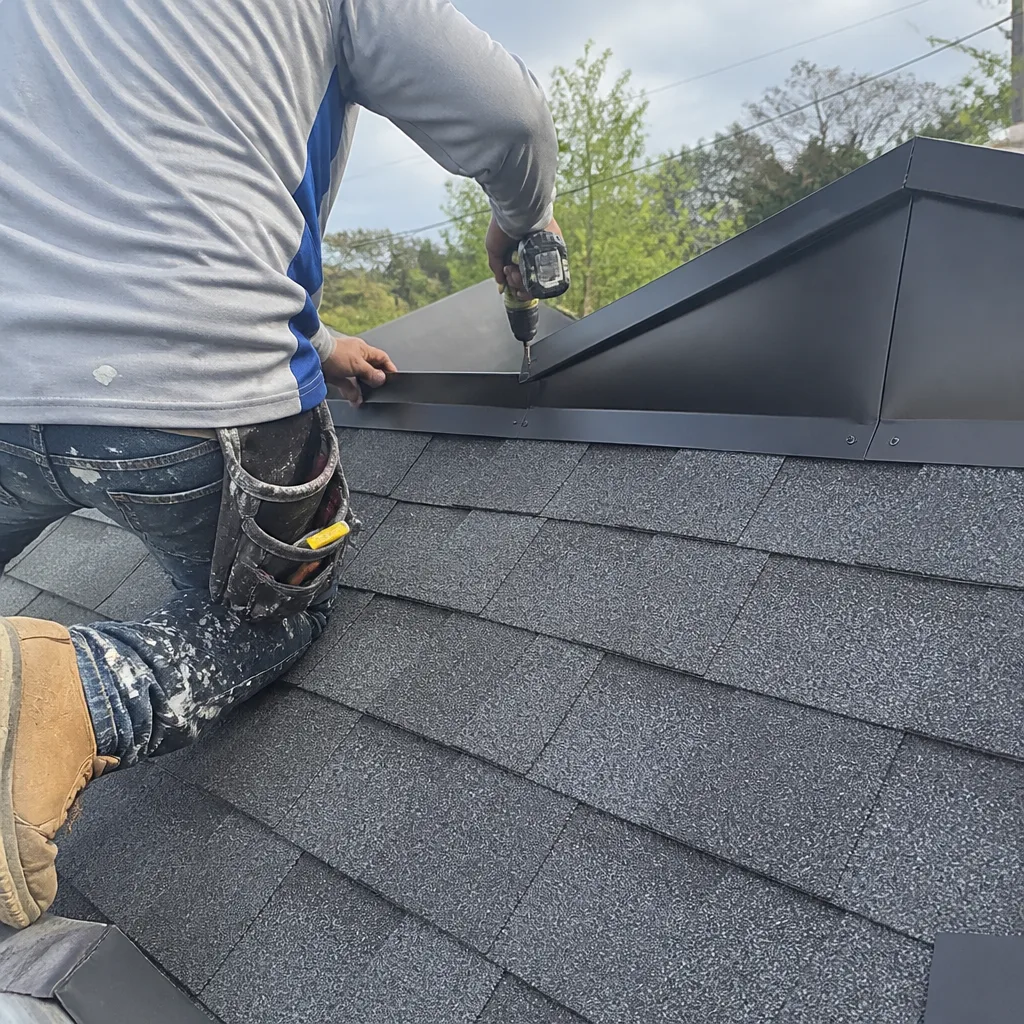 After
After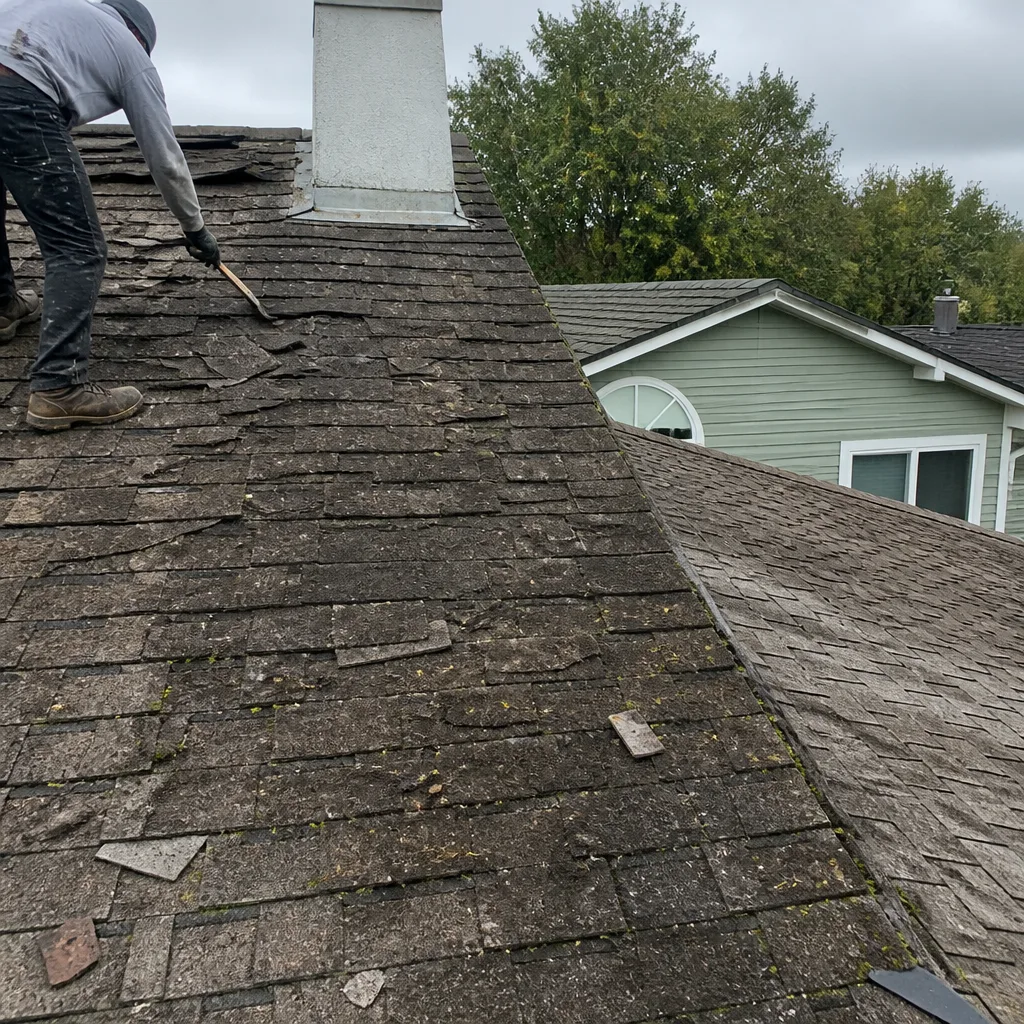 Before
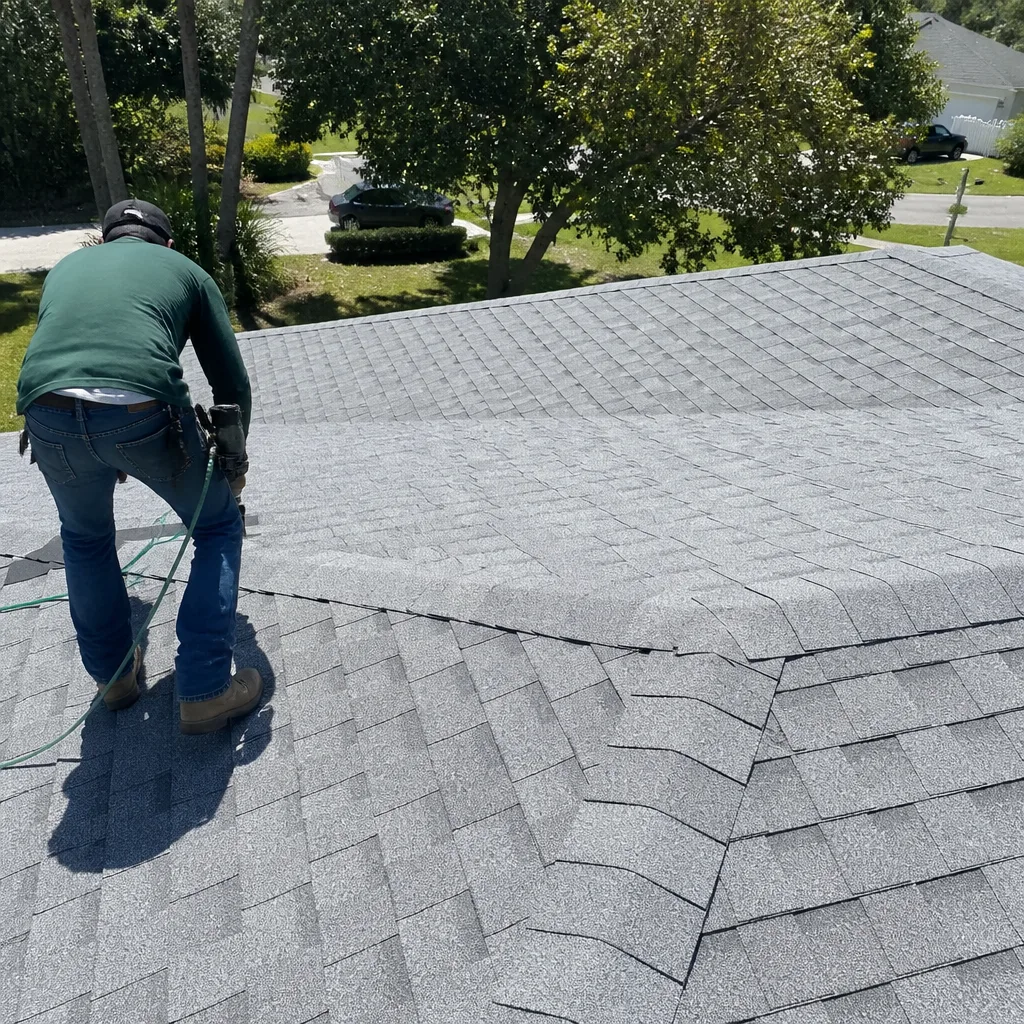 After
After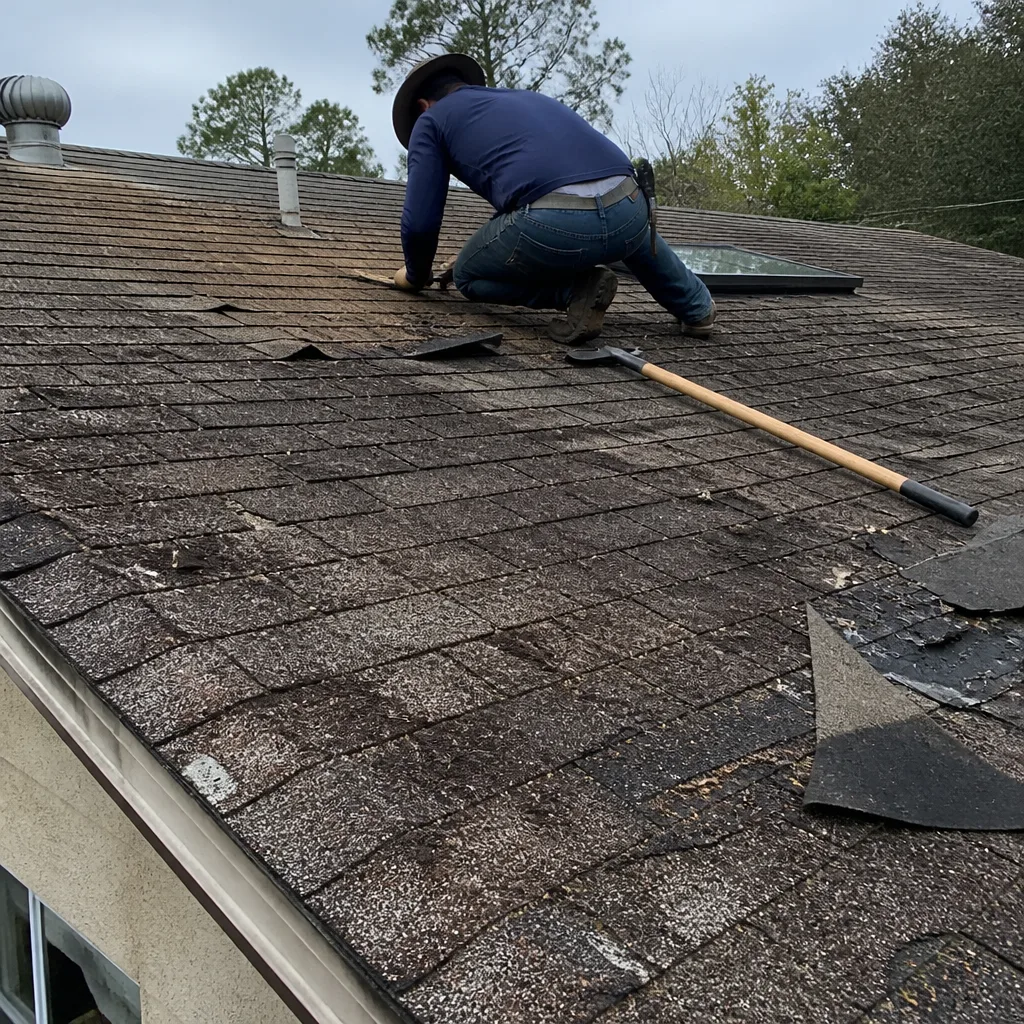 Before
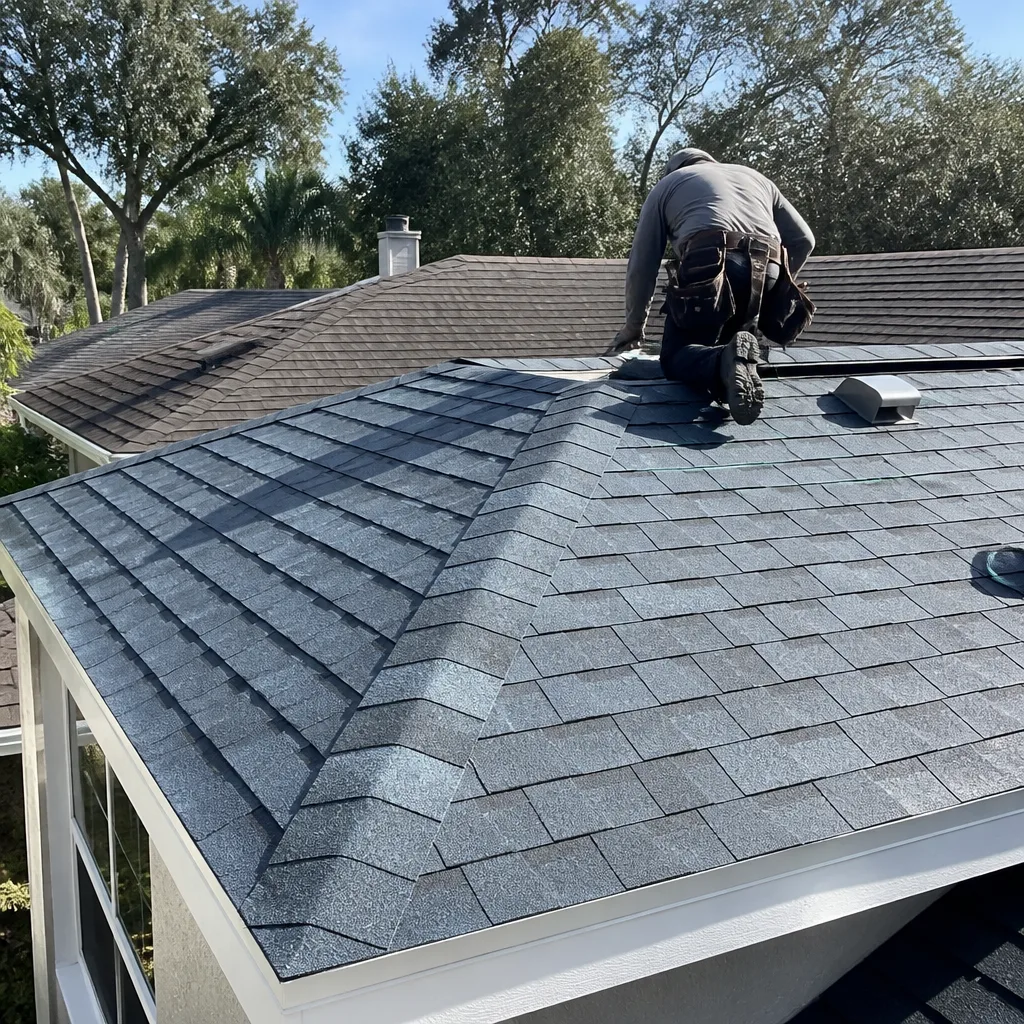 After
AfterFrequently Asked Questions
Professionally, once a year is sufficient for most Tampa roofs, and the best time is November – after hurricane season ends but before the holiday season gets busy. Homeowners with large oak canopies over their roofs, flat-roof sections, or roofs over 12 years old may benefit from twice-yearly professional inspections: once in May before the storms and once in November after the season.
Most residential roof inspections and basic maintenance visits in Tampa run between $150 and $400, depending on roof size, height, slope, and whether the visit includes minor repairs like resealing flashing or replacing a few shingle tabs. Some Tampa roofers offer free inspections when there’s storm damage or a potential repair. Always ask for the price in writing before the work starts. Our pricing is always provided in writing before any work begins.
Yes, and you should. Most useful checks can be done from the ground: walk the perimeter, use binoculars or a phone camera on zoom to look at flashing and ridge caps, check gutters and downspouts for granules, and go into the attic on a sunny day to look for daylight through the decking. The five post-storm checks in this guide are designed for a ladder-free inspection.
No. A maintenance checklist is a schedule of homeowner checks and routine maintenance tasks; a roof certification is a formal document issued by a licensed roofer stating the roof’s condition and remaining life, often required for real estate transactions or insurance purposes. A good maintenance history makes getting a certification easier, but they’re separate documents.
Homeowners insurance generally covers sudden, accidental damage from storms, falling objects, or fire, not gradual deterioration from deferred maintenance. If a leak develops because a pipe boot collar cracked from age, that’s typically a maintenance issue, not an insurance claim. If a storm lifts shingles and water gets in during that same storm, the damage may be covered. Keep records of your maintenance visits; if you do need to file a claim, documentation that the roof was maintained can be helpful.
With diligent maintenance, a quality architectural shingle roof in Tampa can last 20 to 25 years. Without it, the same roof may need replacement at 12 to 15 years. The difference is made up in sealant replacements, flashing reseals, prompt repair of small storm damage, and keeping the roof dry and clear of debris so shingles aren’t holding moisture. A maintenance program is the cheapest roof insurance a Tampa homeowner can buy.
The Bottom Line
Tampa roofs fail because of what homeowners don’t notice, not because of what a hurricane does in one dramatic afternoon. The maintenance plan that protects you runs May through November: clear gutters and check scuppers in late May, do ground-level checks after every severe storm, inspect for granule loss in October, and book a professional inspection every November. Algae streaks are cosmetic and can wait; moss, lifted ridge caps, and heavy granule loss are structural and can’t. Document everything. Insist on dated photos and a written report after any professional visit. A roof that’s maintained on this schedule will outlast a neglected one by a decade, and the maintenance costs are a fraction of the emergency repair costs they prevent. For more guides & resources, visit our blog.
Written by Erik Lindgren, Owner at Birchbark Roofing Tampa, serving Tampa since 2000.
Need a professional inspection, repair, or maintenance visit? We serve all of Tampa with free estimates and written pricing before any work starts. Shoe covers at the door, drop cloths through the hallway, all debris cleared and photographed before we leave. Call (850) 600-8577 to schedule your free estimate.