
Last updated October 17, 2026
 Metal roofing
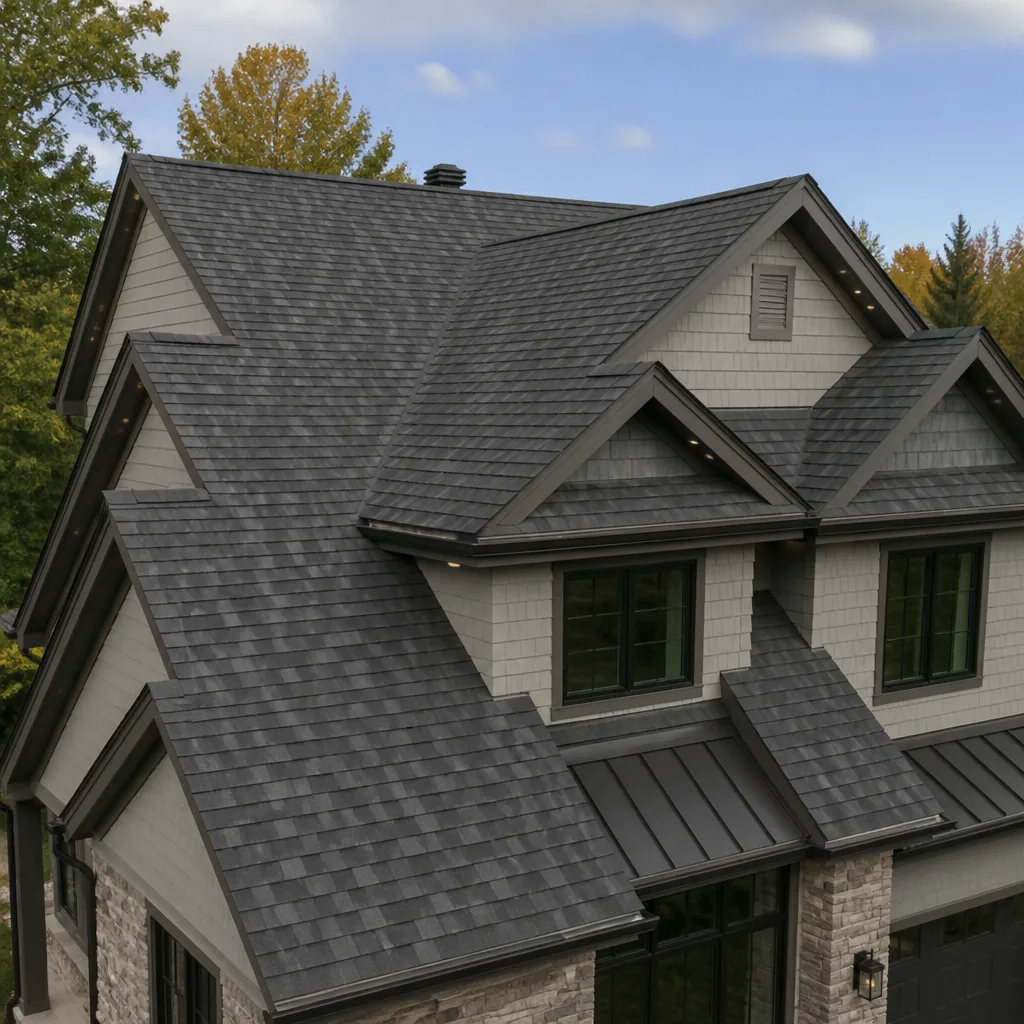 Architectural shingles
 Tile roofing
 GAF
GAF Owens Corning
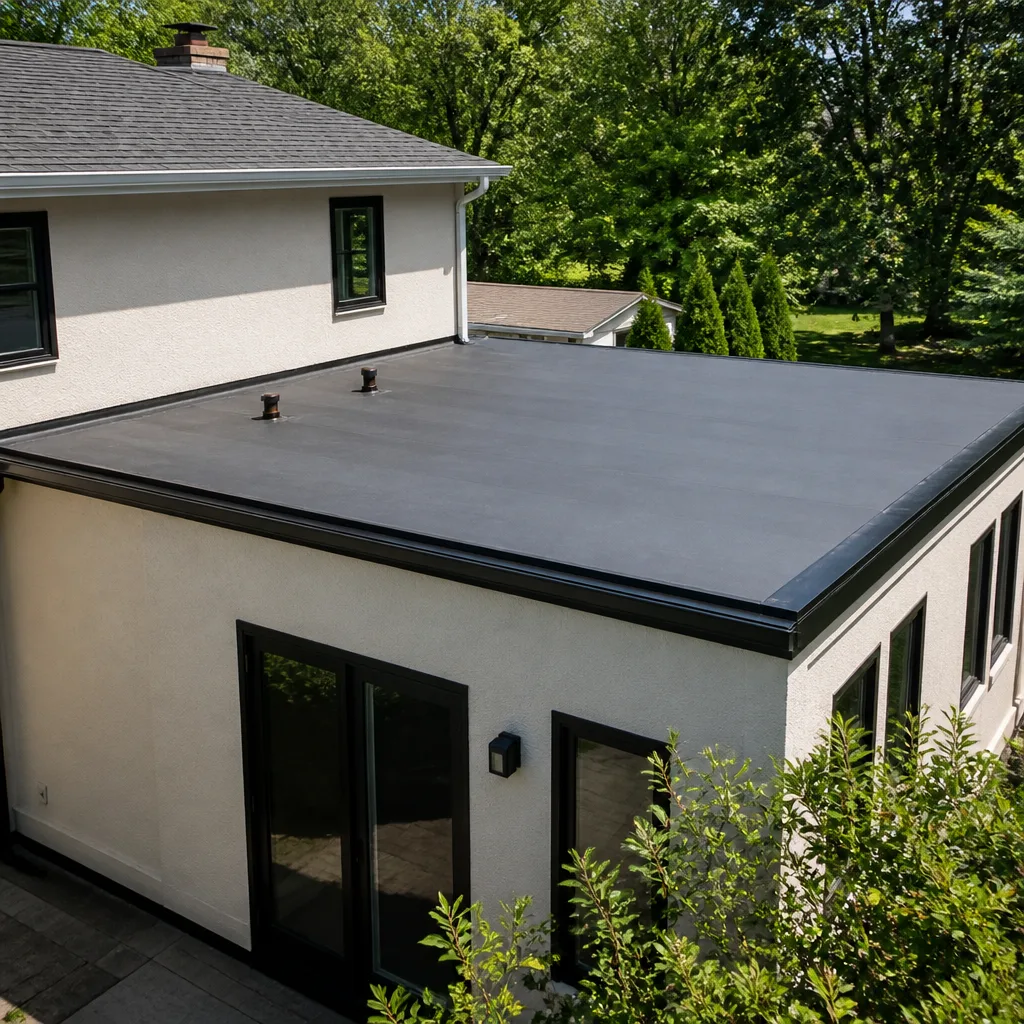 Flat & low-slope
Free roof inspection with deck photos before we talk money - GAF and Owens Corning certified installation
Roofing Warning Signs: A Tampa Homeowner’s Reference Guide
A ceiling water stain in Tampa typically means the roof failure happened 60 to 90 days earlier. The stain is just the moment the saturated roof decking finally ran out of places to hold moisture. Before that brown ring appeared on your ceiling, your roof had been sending quieter signals for months: granules collecting in a gutter downspout, a faint musty smell in the attic after an afternoon thunderstorm, a subtle dip in the ridge line visible from the street. Our complete guide to roofing in Tampa teaches you to read those earlier signs, the ones Tampa’s heat, humidity, and storm patterns write onto every roof in the city, so you can act when the repair is still measured in hundreds of dollars rather than thousands.
Styles & brands we work with
Quick Answer
The earliest warning signs of roof trouble in Tampa are visible from the ground or inside your attic, not from the roof itself: granule accumulation in gutters, soffit discoloration near roof edges, daylight pinpricks visible in the attic, wet-wood smell after rain, and ridge line sag. Algae and lichen growth on north-facing or low-pitch slopes signals moisture retention, which shortens shingle life. If you see granules, schedule an inspection at your convenience. If you see daylight through the roof deck or water actively entering, call a roofer today.
Table of Contents
- Ground-Level Warning Signs You Can Assess Without a Ladder
- Attic Warning Signs That Appear Months Before Ceiling Stains
- What Tampa’s Algae and Lichen Growth Actually Tells You
- Two-Tier Triage: Schedule an Inspection vs. Call Today
- How to Document and Photograph Warning Signs Over Time
- Why Tampa’s Climate Accelerates Every Warning Sign
- What Repair Costs Look Like in Tampa When You Catch Signs Early
- Common Mistakes to Avoid
- When to Call a Professional
- Frequently Asked Questions
- The Bottom Line
Ground-Level Warning Signs You Can Assess Without a Ladder
You don’t need to climb on your roof to read its health. Most of the warning signs that matter in Tampa are visible from your driveway, your backyard, or a sidewalk across the street. We’ve walked thousands of Tampa properties where the homeowner could have spotted trouble weeks earlier just by looking at three specific areas: gutters, soffits, and the ridge line.
Granule Accumulation in Gutters and Downspouts
Asphalt shingles shed granules as they age, but the pattern of that shedding tells you whether the loss is normal or a warning sign. Normal granule loss happens gradually and deposits a fine, even layer of grit across the bottom of a gutter. A warning sign looks different: heavy piles of granules collecting at downspout elbows, or a shimmering black-and-color mix in the gutter after a hard rain. When a roof loses granules at that rate, the asphalt mat underneath is exposed to direct UV, and in Tampa’s sun that exposure accelerates rapidly. Check your downspout splash blocks too; granules that wash all the way down the downspout often settle there. If you see granule piles the size of a tablespoon or larger per downspout per season, note the date. It’s a signal to schedule an inspection through a roof repair assessment in Tampa before the exposure widens.
Soffit Discoloration and Staining
Soffits are the flat boards that run horizontally under the roof overhang. In Tampa, they are one of the first places water intrusion shows itself. Look for dark streaks running along the soffit, rust-colored drip marks, or paint peeling at the seam where the soffit meets the fascia board. Soffit staining often means water is getting past the shingle edge or the drip edge flashing and wicking backward into the overhang. Pay particular attention to soffits on the western and southwestern sides of the home, where Tampa’s afternoon thunderstorms drive rain at an angle. Dark stains there, especially after a summer storm season, mean the roof edge is not shedding water cleanly. White or gray staining, by contrast, is usually condensation from inadequate attic ventilation; that matters too, because trapped moisture rots roof decking from below.
Ridge Line Sag Visible From the Street
Stand across the street and look at the top of your roof, the line where two slopes meet. That line should be straight. If it dips in the middle or appears to curve slightly, the roof decking underneath has begun to soften or the ridge structure has lost its rigidity. Tampa’s humidity soaks into decking through even small gaps, and over months, wet plywood or OSB loses its load-bearing strength. A sagging ridge line is never a cosmetic issue. It means moisture has been working inside the roof structure long enough to change its shape. In neighborhoods like Seminole Heights and Riverside Heights, where many homes have original mid-century framing, a sagging ridge line often develops after years of slow leaks around ridge vents. Walk out to the street, look at the top line of your roof, and if it’s not a clean, straight edge, mark the date.
Curling, Buckling, or Missing Shingle Tabs
From the ground, look at the lower edges of the shingles on any slope. In Tampa, shingles on south-facing slopes take the worst of the UV and heat. If the corners of individual shingles are turning upward, the adhesive strip that bonds the shingle layers is failing. Once a shingle tab lifts, wind from a passing summer storm gets underneath and can peel back an entire section in minutes. Missing shingles are an obvious sign, but curling ones are the earlier warning. If you catch curling shingles before the first tropical storm of the year, the fix is often localized. If you wait until after the storm, the damaged zone widens. A quick way to check from the ground: at the right angle, a flat roof looks uniform and flat; a roof with failing adhesive shows small shadows at regular intervals where tabs have lifted.
Attic Warning Signs That Appear Months Before Ceiling Stains
The attic is the most underused diagnostic tool on a Tampa home. By the time water reaches the ceiling drywall, it has passed through the shingles, the underlayment, and the roof decking. That journey takes weeks or months. During that time, the attic is full of evidence. Here is what to look for, in the order the signs typically appear.
- Daylight pinpricks through the roof deck. Go into the attic on a bright afternoon and turn off any light. Let your eyes adjust for 60 seconds. Look up. If you see small points of daylight coming through the wood decking, water is also getting through. These pinholes are often at nail points, where a nail has backed out slightly and left a small opening. In Tampa’s rainy season, each pinhole admits water during every storm. Mark visible pinholes with tape from inside, or photograph them with your phone. This is the earliest physical sign that water entry is occurring.
- Compressed or matted insulation. Insulation should look full and airy. If you see sections where the insulation is flattened, darkened, or has visible water-stain rings, water has been dripping onto it. Wet insulation compresses and loses its R-value, but more importantly, it is a sign that water has already entered past the roof deck. Look especially at insulation near the eaves, where runoff collects before exiting via gutters. In Tampa, a common pattern is compressed insulation along the lower edges of the attic, where roof edge leaks drip inward.
- Wet wood smell after rain. Wood that gets wet and stays wet develops a distinct smell, musty and earthy, that is strongest in the first 24 hours after a storm. Tampa’s daily summer thunderstorms mean you can check this almost any week between June and September. Go into the attic the morning after an afternoon storm and breathe in. If you smell it, water is staying somewhere. Even if no pinholes are visible, the decking may be absorbing water through hairline gaps around flashing points. This smell is a warning sign that precedes visible staining by months in most Tampa homes we inspect.
- Dark or rusty nail points sticking through the deck. If you see black or rust-colored points where nails protrude through the roof deck into the attic space, water has been condensing or dripping there. In humid attics with poor ventilation, metal nails rust even without a leak, but active dripping leaves a dark ring around the nail point. Look at the areas around plumbing vents, bathroom exhaust fans, and the chimney chase first. Those penetrations are the most common leak paths in Tampa roofs.
None of these attic signs require special tools. What they require is a homeowner willing to go up on a dry afternoon with a flashlight. We have met dozens of Tampa homeowners who caught a leak at the pinprick stage, fixed it with a small roof repair, and never saw a ceiling stain at all. That is the point of this guide: the attic tells you what the ceiling will show you in two months.
What Tampa’s Algae and Lichen Growth Actually Tells You
Every Tampa homeowner has seen the black streaks on asphalt shingle roofs, especially on north-facing slopes or under tree cover. That staining is Gloeocapsa magma, a blue-green algae that feeds on the limestone filler in asphalt shingles. Most people treat it as a cosmetic issue, and most of the time it is. But the location and pattern of the growth tell you something specific about your roof’s vulnerabilities.
North-Facing Slopes and Moisture Retention
Algae grows where moisture persists. On a Tampa roof, north-facing slopes get less direct sun, so dew and rainwater evaporate more slowly. If you see algae primarily on north-facing slopes and not on south-facing ones, that is normal for the algae, but it is also a warning sign about moisture. Those same slopes are the ones where shingles stay damp longest, and damp shingles degrade faster. If the algae growth is thick, with dark patches that look almost black even after a week of dry weather, the shingle surface underneath is being held wet for long periods. That shortens shingle life in a measurable way. You do not need to replace the roof because of algae, but you should note that north-facing slopes wear faster in Tampa and schedule inspections with that in mind.
Lichen and Moss on Low-Pitch Areas Near Overhangs
Lichen is different from algae. Lichen is a composite organism that anchors itself to the shingle surface, and in Tampa it appears most often on low-pitch roof sections, near overhangs, and under tree canopies. Lichen roots can lift the edges of shingle granules and create small water traps. Over time, these spots hold water against the shingle mat, accelerating deterioration. On a low-pitch roof, where water already moves more slowly, lichen growth is a signal that moisture hangs around long enough to support biological growth. That same moisture is working on the shingles underneath. If you see green or gray lichen patches spreading across a low-pitch section, schedule an inspection. The underlying shingles may already be breaking down faster than their stated lifespan.
What the Growth Pattern Predicts
In our experience inspecting Tampa roofs, algae growth concentrated in specific bands often correlates with areas where tree canopy shades the roof for most of the day. Those shaded areas stay damp longer after rain, and the shingles there wear faster. That is not a reason to panic or cut down every tree. It is a reason to inspect those specific sections more carefully. When a roofing company performs a roof inspection in Tampa, the person on the roof should pay special attention to shaded and algae-covered sections, because that is where premature wear shows up first. If an inspector walks the whole roof uniformly and does not adjust for algae patterns, the inspection is incomplete.
Two-Tier Triage: Schedule an Inspection vs. Call Today
Not every roof warning sign is an emergency. Understanding the difference saves you money: a non-emergency inspection can be scheduled at a convenient time, while a true emergency should be addressed before the next rain. Here is our two-tier guide for Tampa homeowners.
Tier 1: Schedule an Inspection at Your Convenience
- Granule accumulation in gutters without any interior water evidence.
- Curling shingle tabs on one section of the roof.
- Algae or lichen growth, even if thick.
- Rusty nail points or minor condensation signs in the attic.
- Soffit staining that is mild and has not spread in the last 30 days.
- Indoor musty smell after rain that fades within a day.
- Ridge line that appears slightly uneven but has not changed recently.
These signs indicate the roof needs attention, but not tonight. A scheduled inspection, with a written price for whatever repair is needed, is the appropriate response. You have time to compare options and ask questions. The damage is progressing slowly enough that a few days or even a couple of weeks will not change the scope meaningfully.
Tier 2: Call Today
- Water actively dripping or running inside the home during rain.
- Visible daylight through the roof deck at multiple points.
- A ceiling stain that appears or grows visibly after each rain.
- A ridge line that sagged noticeably after a recent storm.
- Missing shingles exposing the underlayment or decking, especially during summer storm season.
- Wet insulation that is soaked through, not just damp.
- Lichen growth that has begun to lift whole shingle edges away from the roof surface.
These are signs of active water entry or structural weakening. Every rain event between now and the repair expands the damage zone. In Tampa, where afternoon thunderstorms are a near-daily occurrence from June through September, a small active leak can double its repair cost in a matter of weeks. Call a roofer today, and if water is actively coming in, tell the person on the phone so they can triage the situation properly.
How to Document and Photograph Warning Signs Over Time
A single photograph of a roof problem is useful. A series of photographs taken weeks apart is far more so. Rooftop problems progress at different rates, and documenting that progress lets a roofer assess how urgently you need to act. Here is a simple process that any Tampa homeowner can follow with a phone camera.
- Establish a baseline. On the first day you notice any warning sign, take photographs from at least three angles: the ground-level view of the affected area, a close-up of the specific sign, and a wider context shot that shows where on the roof the sign is located. Name the photo files with the date and location, like “gutter-granules-northeast-corner-july-14.”
- Re-photograph on a schedule. If the sign is mild, re-photograph every 30 days. If it is more serious, re-photograph after every heavy rain. Tampa’s storm season gives you plenty of data points between June and September. Use the same angles each time so the comparison is valid.
- Photograph after specific events. After a severe thunderstorm, a tropical storm, or a strong wind event, go outside and photograph the roof from the ground. Look for new signs: a shingle tab in the yard, new granule piles in the gutter, a branch resting on the roof edge. These event-specific photos tell a roofer when and how the damage likely occurred.
- Include scale references. For granule accumulation, place a coin or a ruler next to the pile. For a ceiling stain, photograph it with a dollar bill or a tape measure in the frame. Scale references prevent the “is this getting bigger?” uncertainty.
- Store the photos in one place. Create a folder on your phone or computer called “Roof Documentation.” When you call for an inspection, share the photos with the roofer before they arrive. This saves time and gives the inspector a head start on understanding the progression.
Documentation also protects you during the repair process. A photo of a ceiling stain taken before the repair starts is your record of the original scope. When the roofer provides a roof replacement estimate in Tampa or a repair quote, the written price should match the documented scope. If there is ever a question about what was agreed to, the photos and the written price together are your protection.
Why Tampa’s Climate Accelerates Every Warning Sign
Tampa’s climate is a pressure cooker for roofing materials. Our Seasonal Roofing Care for Tampa: Year-Round Homeowner’s Guide explains how the heat, humidity, and rainfall patterns stress a roof so you can interpret the warning signs correctly. The signs that might take years to develop in a drier climate can appear here in a single season.
UV and Heat: The Shingle Killer
Tampa receives roughly 244 days of sunshine per year, and the summer sun beats down on roof surfaces at temperatures that can exceed 150 degrees. Asphalt shingles are designed for that heat, but only when their protective granule layer is intact. Once granule loss begins, the exposed asphalt mat heats faster and degrades more quickly. The difference between a roof with intact granules and one with granule loss is like leaving a rubber hose in the sun versus leaving it in the shade. Both are under the same sky, but one deteriorates far faster. In Tampa, UV acceleration is not a theoretical concern; it is a daily reality from April through October.
Humidity: The Rot Multiplier
Ambient humidity in Tampa routinely sits above 70 percent, and often above 90 percent at night. That matters because wood roof decking absorbs moisture from the air even without rain. When a leak introduces liquid water, the decking soaks it up and the humidity prevents it from drying out. In a dry climate, a small leak might dry out between storms and cause little lasting damage. In Tampa, the same leak keeps the decking wet for weeks, allowing rot fungi to establish and grow. This is why attic warning signs like wet-wood smell and compressed insulation are more serious in Tampa than the same signs would be in a drier city. The moisture never really goes away.
Storm Patterns: The Repeated Stress Test
Tampa’s afternoon thunderstorms are not just sources of rain; they are wind events. A typical summer storm brings gusts that can peel up a loosened shingle tab, drive rain horizontally into roof edges, and dump an inch of water in 30 minutes. That water enters anywhere the roof has a small opening: a nail pop, a crack in the flashing, a ridge vent that has separated slightly. The daily repetition of these storms means a small vulnerability is tested again and again, every afternoon, all summer. Roofs in Tampa do not fail from one big event; they fail from thousands of small events that compound. Every warning sign in this guide is a sign that the compounding has already started.
What Repair Costs Look Like in Tampa When You Catch Signs Early
The single best financial argument for paying attention to roof warning signs is the cost curve. Catching a problem early keeps the repair small and the price low. Missing it until water reaches the ceiling expands both the repair scope and the cost. Here is what we see in Tampa’s market, with dollar ranges to give you a realistic picture.
| Issue Found | Typical Repair Scope | Typical Cost Range in Tampa |
|---|---|---|
| A few lifted or damaged shingles caught early | Repair a small section of shingles, reseal edges | $250 – $500 |
| Flashing failure at a pipe or vent | Replace flashing boot and reseal the penetration | $200 – $450 |
| Small area of granule loss on one slope | Apply protective coating or replace damaged shingles in a localized area | $300 – $800 |
| Soft decking from a slow leak | Replace a section of roof decking and the shingles above it | $600 – $1,500 |
| Ceiling stain from long-term active leak | Replace decking, repair interior drywall, replace shingles, possible insulation replacement | $1,200 – $3,500 |
| Neglected damage causing widespread decking rot | Full roof replacement with some structural repair | $9,000 – $18,000+ |
These ranges reflect Tampa’s market for standard asphalt shingle work using materials from manufacturers like GAF, CertainTeed, and Owens Corning. Your exact number will depend on the roof’s pitch, accessibility, and the selected materials. At Birchbark Roofing Tampa, every job starts with a written price in dollars before any work begins, so you know the cost before you commit. No one at Birchbark will ask you to approve work without a clear number on paper.
The cost curve in this table tells the whole story. The difference between catching a problem at the lifted-shingle stage and catching it at the ceiling-stain stage is roughly four to ten times the repair cost. The difference between the ceiling-stain stage and the full-replacement stage is another four to six times. Paying attention to the early signs is not just about protecting your home. It is the best return on attention you will ever get as a homeowner.
Common Mistakes to Avoid
- Waiting for the ceiling stain. The ceiling stain is the last stop in a long journey. By the time water reaches the drywall, decking and insulation have been wet for weeks. Check your attic twice a year and after any heavy storm instead.
- Assuming algae is just cosmetic. Algae itself does not destroy a roof, but the moisture patterns that let algae thrive are the same patterns that shorten shingle life. Where algae grows thick, the shingles underneath are being held damp longer than elsewhere. Do not ignore thick, persistent growth.
- Climbing onto the roof to inspect it yourself. A homeowner without proper footwear and a safety harness does not belong on a sloped roof. The ground-level signs and attic signs in this guide cover most warning signals, and a professional inspection is not expensive. Steep roofs and slick algae are genuinely dangerous; leave the climbing to a trained roofer.
- Painting over a ceiling stain. A coat of paint hides the stain but does not stop the leak. The water keeps moving through the decking, and the damage continues behind the fresh paint. A homeowner who has painted the same stain twice has paid for paint and the repair.
- Ignoring the north-facing slope. Tampa homeowners tend to look at the side of the roof they see from the driveway or the street, which is often the south-facing side. The north-facing slope wears faster and is usually the first to show algae, lichen, and shingle deterioration. Walk around the whole house.
- Not getting a written price before work begins. Verbal estimates shift. A written price in dollars, given before work starts, is the simplest protection a homeowner has. If a roofer will not put the number on paper, find another roofer.
- Removing a tree limb from the roof without checking for damage underneath. After a storm, homeowners clear branches off the roof and assume that is the end of it. Branches scrape granules and crack shingles on impact, and those impact points often leak later. Check for granule piles and cracked tabs after every branch-removal.
When to Call a Professional
Call a roofer when you have documented a warning sign that has not resolved in 30 days, when you see any sign of active water entry, or when a storm has left visible damage. You should also call if you are simply unsure; a professional inspection answers the question without obligating you to a repair. Birchbark Roofing Tampa offers free estimates in the Tampa area, and every visit includes a written price before any work begins. Our technicians wear shoe covers inside your home, put down drop cloths where they work, and send you a photo of the completed clean-up before they leave, so you never wonder whether the crew treated your home like a job site. Call (850) 600-8577 to schedule an inspection, and you will speak to a live person, not a voicemail tree.
Frequently Asked Questions
You can identify most early roof warning signs from the ground or from inside the attic-granule accumulation in gutters, soffit staining, ridge line sag, daylight pinpricks in the attic, wet-wood smell after rain, and compressed insulation-though knowing when to choose DIY versus professional roofing in Tampa can save you from a dangerous misstep. If you see any of these, call (850) 600-8577 for a professional inspection rather than climbing onto the roof yourself.
Granules in gutters mean your shingles are shedding their protective UV coating. Some granule loss is normal with shingle age, but heavy piles accumulating at downspout elbows signal that the asphalt mat is being exposed to Tampa’s intense sun, and that exposure accelerates shingle failure. Schedule an inspection if the granule piles are thick or reappear quickly after cleaning.
Algae itself does not create holes in a roof, but it grows where moisture persists and it signals a damp environment that wears shingles faster. On north-facing slopes and under tree canopy, algae-covered areas are often the first places where shingle deterioration and subsequent leaks develop. Treat thick algae as a reason to inspect, not a reason to ignore the roof.
A roof leak in Tampa can go unnoticed for 60 to 90 days before a ceiling stain appears, because the roof decking absorbs water and the high humidity prevents it from drying. During that time, the leak weakens the decking and soaks the insulation. Checking your attic monthly during the summer storm season catches these leaks much earlier. If you suspect a leak, call (850) 600-8577 for a free estimate on a professional assessment.
Black streaks from algae are not by themselves a reason to replace a roof. The decision depends on the shingles’ age, granule condition, and the presence of other warning signs like curling tabs or moisture entry. A professional inspection can tell you whether the algae-covered areas are still performing or have begun to deteriorate. Birchbark Roofing Tampa will give you a written assessment and a written price for any needed work, so you can decide with the facts on paper.
Document the stain with a photo that includes a scale reference, then check the attic directly above the stain for wet insulation, daylight pinpricks, or active dripping. If water is actively entering, call a roofer today. If the stain is dry and appears stable, schedule an inspection at your convenience. Either way, do not paint over the stain before the roof issue is resolved.
The Bottom Line
Tampa’s climate does not hide roof problems; it advertises them, long before the damage becomes expensive. Granules in the gutter, a musty attic after rain, a ridge line that dips, algae that clings to north-facing slopes: each is a message about what is happening on your roof, and each appears in time to act. The homeowners who catch these signs early spend hundreds on small, localized repairs. The ones who wait for the ceiling stain spend thousands. The choice is simply a matter of looking at the right places at the right time. For more guides & resources, explore our blog, or if you see any sign described here and want a professional opinion, call (850) 600-8577. A live person answers, the estimate is free, and the price you see in writing is the price you pay.
Written by Erik Lindgren, Owner at Birchbark Roofing Tampa, serving Tampa since 2000.
See the difference
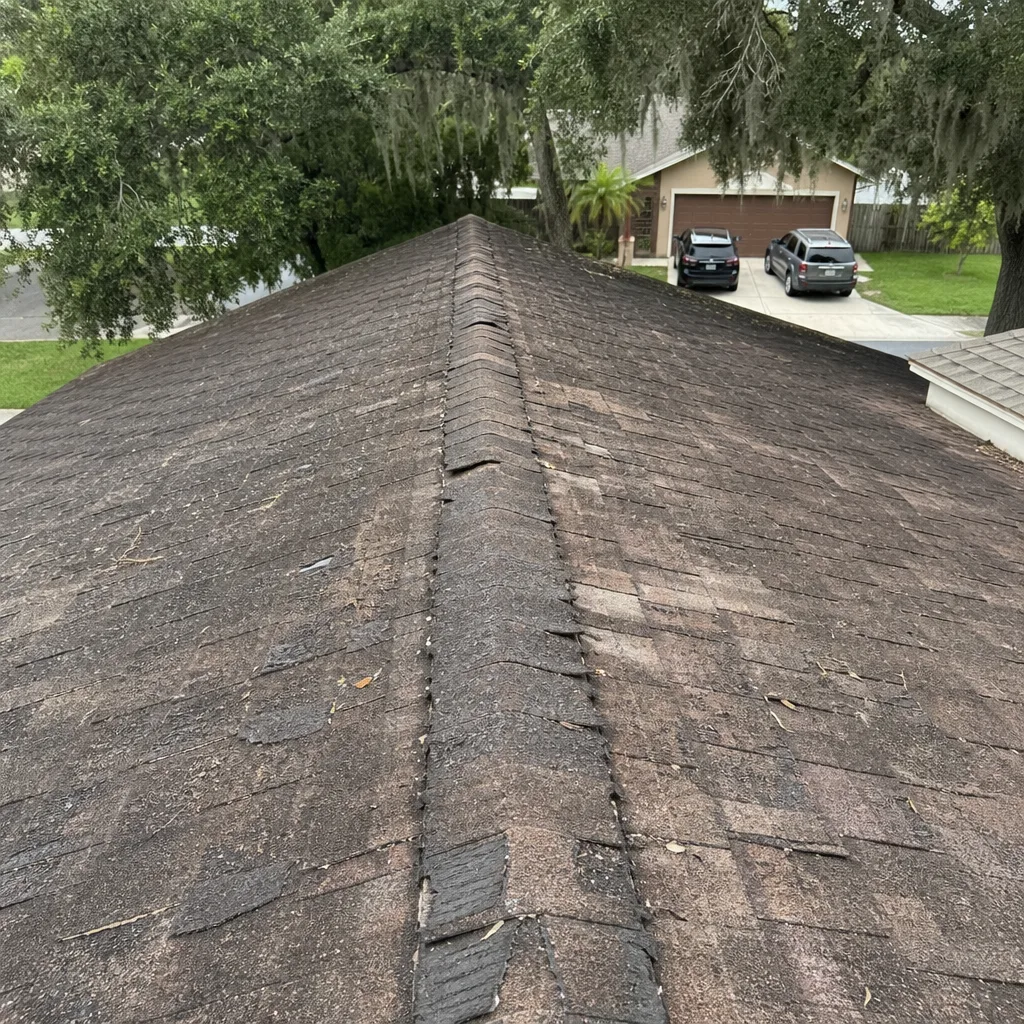 Before
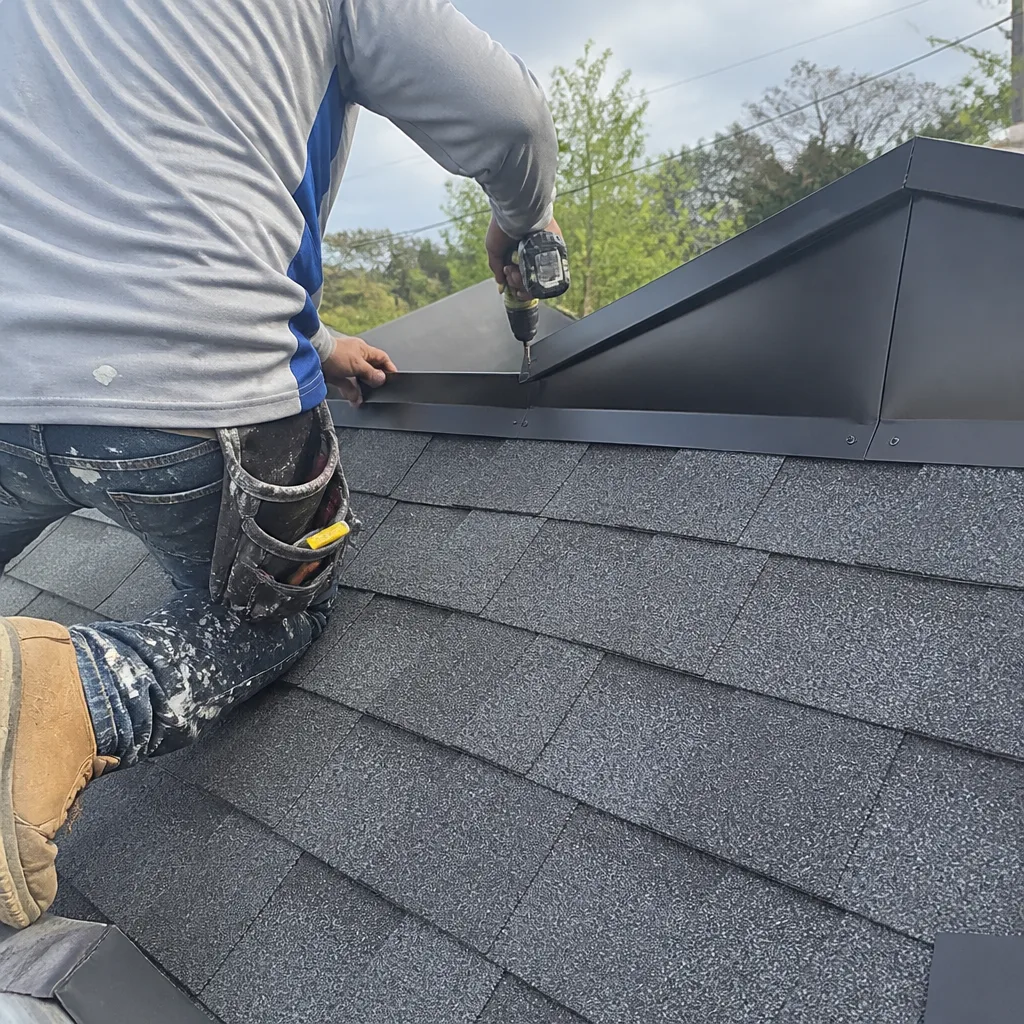 After
After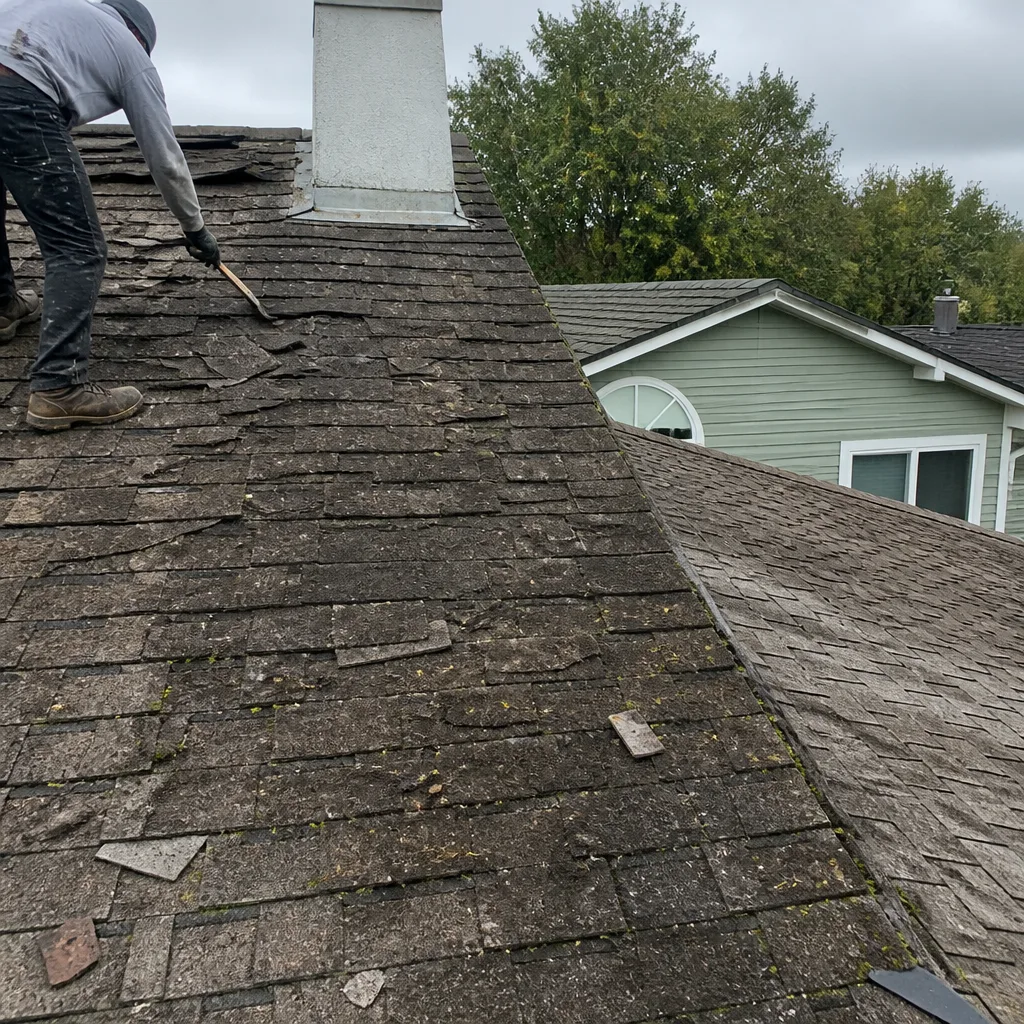 Before
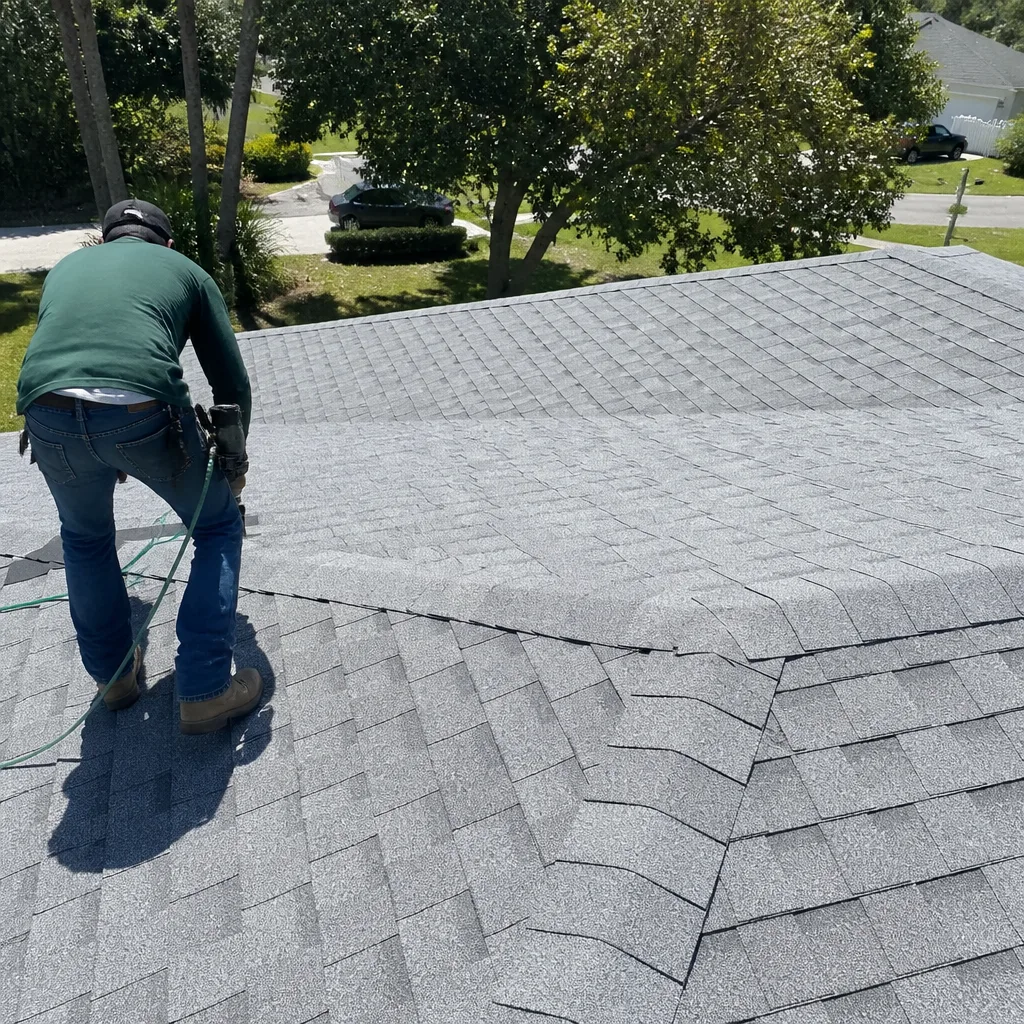 After
After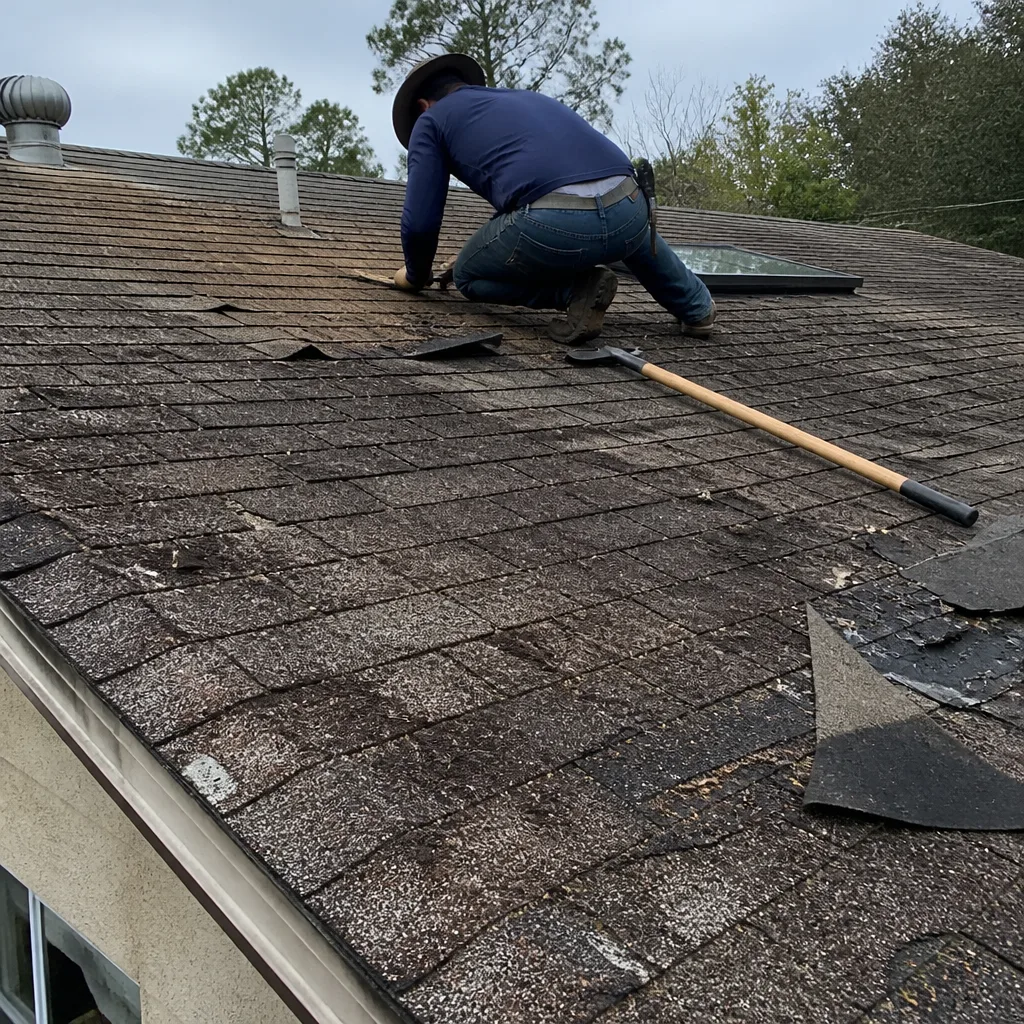 Before
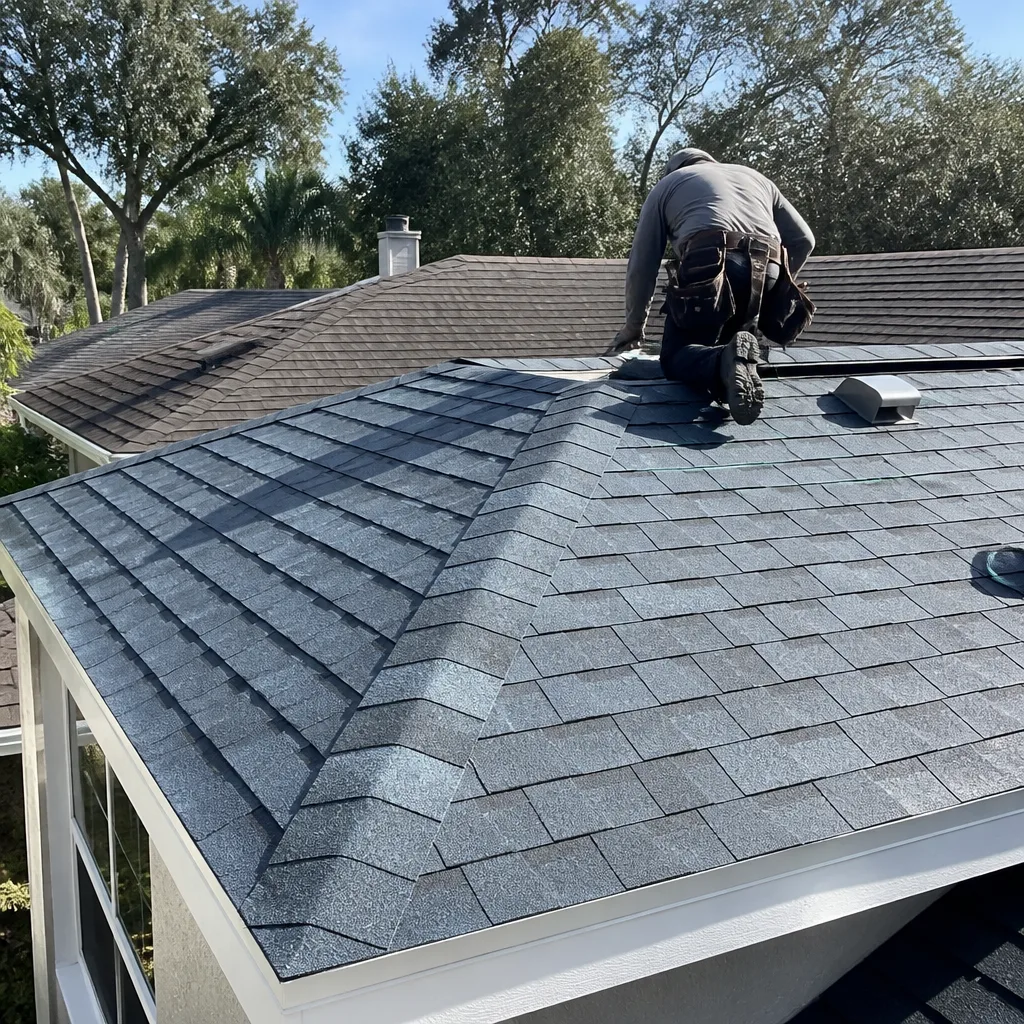 After
After